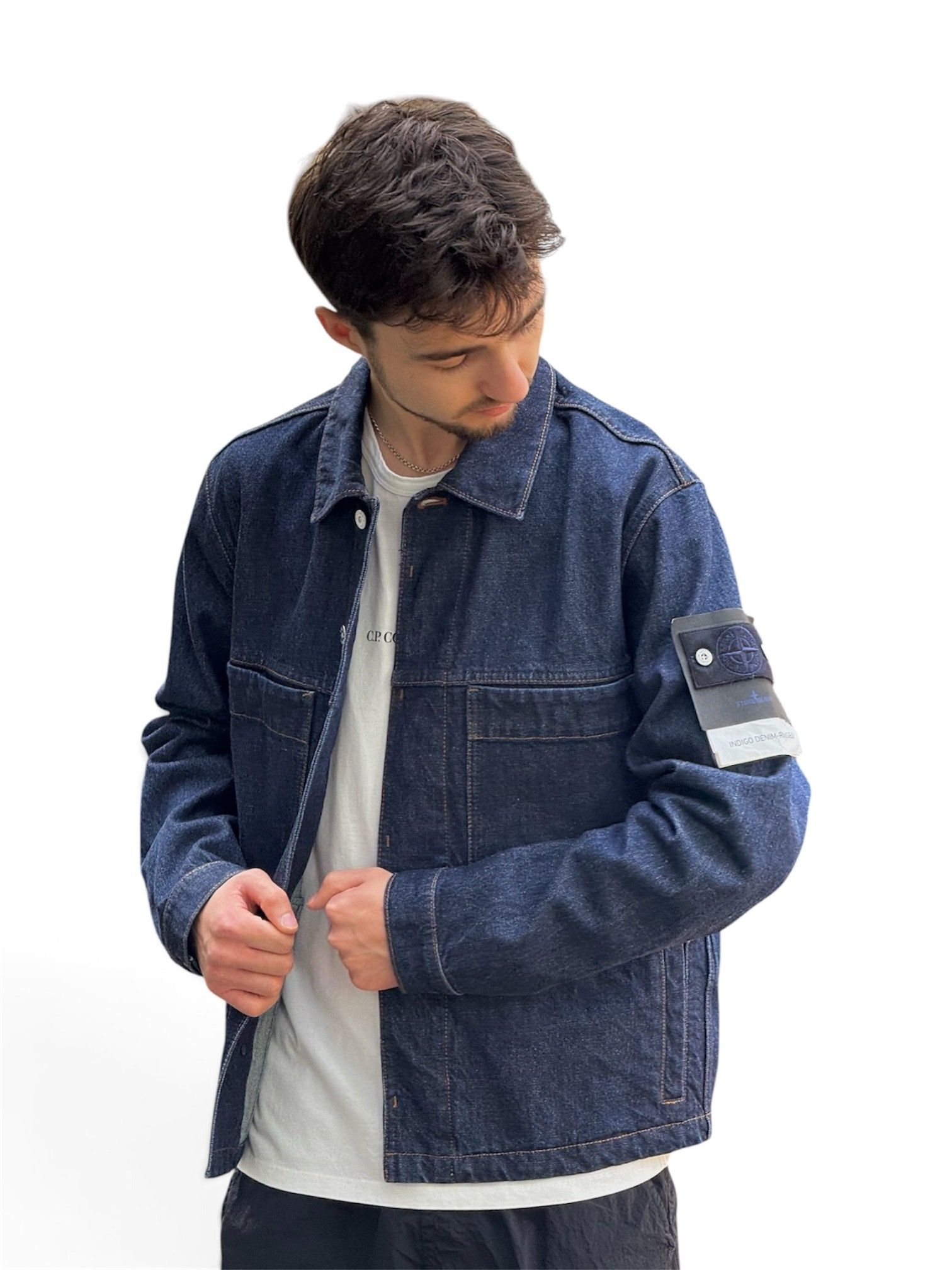
Why Is Stone Island so Expensive? 6 Factors Behind the Price
Written by Frank Struik
In this article
A Stone Island jacket can cost anywhere from €400 to over €1,500, and the price tag rarely explains itself. You see "technical apparel" and "experimental fabric" on the label, but it's hard to know whether you're paying for genuine material innovation, decades of brand legacy, or just the compass badge on the sleeve.
The answer is not straightforward. Stone Island sits at the intersection of luxury fashion, high-quality materials, and a cultural history that stretches back to 1982. Celebrity endorsement, limited production runs, and a reputation built across European streetwear scenes all push the price up. At the same time, some consumers who've bought the brand question whether every piece justifies that premium, or whether part of what you're paying for is the name itself.
This article breaks down the real factors behind the Stone Island price: what goes into the product development, how the brand's history shapes its value, where celebrity association fits in, and how it compares to competitors at similar price points. By the end, you'll have a clear picture of what you're actually paying for.
Why Is Stone Island so Expensive?
Stone Island is expensive because it charges a premium for experimental fabrics, specialist textile treatments, limited production, and four decades of brand heritage. No single factor explains the price. The full cost includes cultural value and exclusivity that fabric specifications alone cannot account for.
The reasons behind Stone Island's pricing fall into a few distinct areas. Some are rooted in genuine material and production costs. Others come down to brand positioning and cultural status.
What Materials and Production Drive the Price?
Stone Island uses fabrics that go through extensive chemical and physical treatments before they reach the finished garment. Selected technical jackets, for example, receive water and wind-resistant treatments applied directly to the material. The brand invests heavily in research and development to produce these textile innovations, which adds cost at every stage of production.
Production runs are limited by design. Stone Island keeps availability tight, which increases demand and allows the brand to hold prices without discounting.
Here's what drives the production-side cost.
- Fabrics are treated for performance, not just appearance.
- R&D spending goes into developing exclusive textile techniques.
- Small production volumes mean lower economies of scale.
- Specialist manufacturing requires skilled labor and longer lead times.
Does the Price Reflect the Quality?
This is where opinions divide. On one side, fans point to the durability and technical design as justification for the price. On the other, some buyers argue that comparable outerwear quality is available for significantly less from brands without the same cultural profile.
The honest answer is that you are paying for two things: the physical product and what the brand represents. Stone Island's history, its association with music subcultures, and its status in streetwear all carry real market value, even if they don't show up in the stitching.
How Does Stone Island Compare to Its Competitors?
The table below compares Stone Island against two comparable technical outerwear brands across price range, key selling point, and target buyer.
| Brand | Entry Price (approx.) | Key Differentiator | Target Buyer |
|---|---|---|---|
| Stone Island | €400–€1,500+ | Textile innovation + brand legacy | Fashion and streetwear |
| Arc'teryx | €200–€900+ | Technical performance, Gore-Tex | Outdoor and performance |
| CP Company | €350–€900+ | Similar Italian heritage, goggle jackets | Fashion, overlapping audience |
Stone Island sits in the same price bracket as Arc'teryx and CP Company. Arc'teryx focuses on measurable outdoor performance. CP Company shares a similar Italian heritage and overlapping buyer base. Stone Island leans harder on cultural identity and experimental materials.
Some buyers find the price fully justified. Others point out that jackets of comparable build quality exist for a fraction of the cost. Both positions are reasonable, depending on how much weight you place on brand legacy and exclusivity versus pure functional value.
Material Innovation
Stone Island's premium pricing starts with how it treats its fabrics. The brand does not simply select high-quality materials and cut them into garments. It subjects those materials to physical and chemical processes that alter their surface, weight, texture, and weather resistance before a finished piece reaches the shelf.
Selected technical jackets receive water-resistant and wind-resistant treatments applied at the fabric stage rather than as a surface coating. This approach makes the treatment more durable than standard spray-on finishes used by lower-priced competitors. The brand's research and development work produces textile techniques that other manufacturers do not replicate at the same scale.

Here is what the material investment typically covers.
- Fabrics go through multi-stage treatments that alter texture, color, and weather resistance.
- Water-resistant and wind-resistant properties are built into selected materials, not sprayed on after construction.
- R&D investment funds the development of proprietary textile processes that remain exclusive to the brand.
- Premium raw materials, including treated wool and polyester blends, carry higher base costs than standard outerwear fabrics.
Material innovation explains a portion of the price. It does not automatically mean every Stone Island item outperforms a competitor at half the cost on every technical measure. The right comparison is always item-to-item, not brand-to-brand.
Massimo Osti's Design Philosophy
Stone Island's technical identity did not emerge from a marketing brief. It came from its founder, Massimo Osti, who approached garment design as a scientific process rather than a fashion exercise.
Osti launched Stone Island in 1982 after working with C.P. Company, which he also founded. His method centered on material experimentation: finding fabrics with unusual properties and building garments around those properties rather than starting with a silhouette. He treated each collection as a series of experiments, testing how textiles responded to dye, heat, wear, and weather over time. Read the full founding story for how that philosophy produced the brand's first fabric, Tela Stella.
That philosophy shaped what Stone Island sells today. The brand's value is not just the finished garment. It is the process behind it: the choice of fabric, the decision to treat it in a particular way, and the willingness to present the result as functional clothing rather than decoration. That design system attracts buyers who pay for a point of view, not just warmth or waterproofing.
A distinctive design philosophy can add real brand value beyond the raw cost of materials. Osti's science-led approach is the reason Stone Island sits in a different market position from outerwear brands that compete purely on price or visible logo recognition.
Garment Dyeing and Construction
Garment dyeing is one of Stone Island's most recognizable production techniques. The process involves constructing the garment first and then dyeing the finished piece, rather than dyeing the fabric before cutting and sewing.
This sequence produces results that differ visibly from standard outerwear. Seams, pockets, and edges absorb dye slightly differently from flat panels, creating color variation across the surface. Over time, repeated washing and wear continue to shift the color, giving each garment a character that changes with use. That aging process is a feature of the design, not a flaw in the construction.
Here is how construction and finishing details contribute to the Stone Island price.
- Garment dyeing requires additional production steps compared to standard pre-dyed fabric construction.
- Color variation across seams and panels is an intended design outcome, not inconsistency.
- Stone Island's felted wool jackets use wool-blend fabrics chosen specifically for how they take dye and develop texture, with the exact blend varying by piece.
- The garment's surface and color continue to develop with wear, which the brand presents as part of the product's identity.
The construction details give Stone Island products a recognizable finish. They support the brand's technical identity but do not, by themselves, prove that every item offers better durability than comparable outerwear at a lower price point.
Functional Sportswear Design
Stone Island builds its collections around function, not just appearance. The brand treats outerwear as a practical category and uses material experimentation to make garments that work in real conditions rather than simply looking technical.
Technical outerwear forms the core of what Stone Island produces. Jackets are designed to handle weather, movement, and daily use, and the materials chosen for each piece reflect that purpose. Some fabrics change texture or surface finish with exposure to heat, light, or wear, and Stone Island frames that change as part of the garment's intended behavior.
What the functional design approach adds to the price.
- Technical outerwear uses fabrics selected for real weather performance, not just visual texture.
- Functional design details, including adjustable fits, treated zips, and structured hoods, add production complexity.
- Materials that age visibly are chosen deliberately to make wear part of the product experience.
- The buyer pays for both the utility and the design language that surrounds it.
Stone Island's functional positioning means the price is not purely a status charge. There is genuine utility built into the better pieces. The honest qualifier is that "functional" covers a wide range, and not every item at every price point delivers the same level of practical performance.
Brand Heritage and Cultural Value
Stone Island launched in 1982 and spent its first decade building a following in Europe before it reached wider international recognition. That history shapes what the brand is worth to buyers today.
By the mid-1980s, the paninari, a youth subculture in Italy, had adopted Stone Island as one of their defining brands. The compass and nautical-star badge on the sleeve became immediately recognizable across European streetwear and football culture. That recognition spread through the UK, Italy, and wider Europe through music scenes, sports stands, and street culture rather than through traditional advertising. The brand did not buy that association. It accumulated over decades.

Here is how heritage contributes to the Stone Island price.
- Four decades of European cultural history create familiarity and desirability that a newer brand cannot replicate quickly.
- The compass badge functions as an instant signal of membership in a specific cultural tradition.
- Brand adoption by distinct communities, including the paninari in the 1980s, adds layers of cultural meaning that go beyond the product itself.
- Generational familiarity, where buyers grew up seeing the brand worn by people they respected, increases willingness to pay.
Cultural value does not show up in a fabric specification sheet. It is a real component of market price, and it explains why two jackets with similar materials can carry very different retail prices depending on which name is sewn inside.
Exclusivity and Price Positioning
Limited production and premium positioning work together to hold Stone Island's prices where they are. When supply stays below demand, full-price selling becomes easier and discounting becomes less necessary.
Stone Island controls availability deliberately. The brand does not flood wholesale channels or mass-market retailers. That constraint keeps the product feeling exclusive even as the brand grows in recognition. Consumer commentary across forums and review threads consistently notes that Stone Island prices have increased substantially over the past 20 years, with some longtime buyers describing the gap between previous and current retail prices as significant.
What the pricing strategy contributes to the final retail price.
- Limited production volumes reduce the availability of specific pieces and support higher prices.
- Premium brand positioning allows Stone Island to hold prices without heavy year-round discounting.
- Consumer reports describe consistent price growth over two decades, suggesting the brand has moved further into luxury territory over time.
- Some buyers wait for Black Friday or post-Christmas sales to purchase Stone Island at reduced prices, which suggests the full retail price is above the threshold many shoppers will pay immediately.
The available research does not reveal Stone Island's exact production volumes, wholesale margins, or internal pricing formula. The observations above reflect consumer commentary and publicly visible retail behavior, not verified financial data.
Stone Island Versus Competitors
Comparing Stone Island to its closest competitors requires looking beyond price. Brand positioning, design philosophy, garment dyeing, heritage, and target buyer all differ across the technical outerwear market, and those differences explain why similar-looking jackets carry very different prices.
Stone Island and CP Company share more than price overlap. Both trace their design lineage to Massimo Osti. CP Company, which Osti founded before Stone Island, uses garment dyeing and shares the Italian sportswear heritage that defines both brands. The goggle jacket, CP Company's most recognizable piece, occupies a similar cultural position to Stone Island's badge-detail outerwear. Buyers who value Italian design heritage, garment dyeing, and functional sportswear will find the two brands genuinely comparable.
Moncler sits in a different part of the market. The French-Italian brand focuses on down outerwear and positions itself more explicitly as luxury fashion. In December 2020, Moncler agreed to acquire Stone Island at a valuation of €1.15 billion, which confirmed that Stone Island belongs in the luxury sportswear category by valuation even if its streetwear roots give it a different feel from Moncler's runway-adjacent positioning.
The table below summarizes how Stone Island, Moncler, and CP Company differ across the dimensions the available research supports.
| Brand | Heritage | Design Approach | Garment Dyeing | Primary Category | Positioning |
|---|---|---|---|---|---|
| Stone Island | Italian, founded 1982 by Massimo Osti | Material experimentation, science-led | Yes | Technical outerwear and sportswear | Luxury streetwear |
| CP Company | Italian, also founded by Massimo Osti | Functional sportswear, goggle jackets | Yes | Technical outerwear | Premium streetwear |
| Moncler | French-Italian, luxury down outerwear | Fashion-forward, runway influence | No | Down jackets and luxury outerwear | Luxury fashion |
Consumer commentary suggests that comparable jackets, without the brand name, can cost substantially less than Stone Island retail prices. That observation is fair. The honest buying framework is to compare the exact item, not the brand name, checking fabric composition, construction quality, weather protection features, and current sale price before deciding whether the premium makes sense for your specific use case.
Key Takeaways
Stone Island is expensive for two distinct reasons, and it helps to keep them separate.
The measurable reasons include premium fabrics, specialist textile treatments, garment dyeing, functional sportswear design, and R&D investment in experimental materials. These are real costs that show up in the production process and, to a varying degree, in the finished garment.
The less measurable reasons include four decades of European cultural heritage, recognizability through the compass badge, association with music and streetwear subcultures, limited availability, and the status that comes with wearing a brand that carries that history. These factors also carry real market value, even if they cannot be verified with a fabric specification.
The premium is easier to justify when you value both sides. It is harder to justify when you need only basic warmth, reliable weather protection, or durability, because alternatives from CP Company, Arc'teryx, or comparable technical outerwear brands can meet those needs at lower prices.
Before buying, compare the specific Stone Island item against a direct competitor on fabric, construction, use case, and current sale price. The brand name alone should not be the deciding factor.
*Looking to compare Stone Island with CP Company or other technical outerwear brands? Check current pricing and fabric details directly on each brand's site before committing to a full-price purchase.*
Stone Island Pricing FAQs
What innovations does Stone Island use in its products?
Stone Island uses premium fabrics, garment dyeing, and multi-stage textile treatments that alter the surface, texture, and weather resistance of finished garments. The brand invests in research and development to produce proprietary techniques, including water-resistant and wind-resistant fabric treatments, that it applies before the garment reaches the consumer.
Why do celebrities wear Stone Island?
Celebrities wear Stone Island because the brand carries a strong cultural identity in European streetwear and music scenes, which gives it visibility and credibility in fashion circles. Celebrity association increases public demand and reinforces the brand's premium positioning, but it does not confirm that the product outperforms competitors on technical measures.
Is Stone Island good quality?
Quality reports are mixed. Many buyers describe Stone Island garments as durable and well-constructed, particularly technical outerwear with treated fabrics. Others argue that the price-to-quality ratio does not hold up against less culturally prominent brands at similar or lower price points. Check reviews for the specific item you are considering rather than relying on brand reputation alone.
How does Stone Island compare to Moncler and CP Company?
Moncler is positioned further into luxury fashion and focuses primarily on down outerwear, while CP Company shares Stone Island's Italian heritage and garment dyeing approach and targets a similar streetwear buyer. CP Company tends to come in at a lower price point than Stone Island for comparable pieces, making it a relevant alternative for buyers who prioritize Italian sportswear heritage over Stone Island's specific cultural status.
When is the best time to buy Stone Island at a lower price?
Some consumers buy Stone Island during Black Friday or post-Christmas sales, when selected pieces become available at reduced prices. Buying at sale price can make the brand more accessible, but availability of specific items is not guaranteed during these periods.