Stone Island ART Number: How to Read, Decode, and Authenticate
Written by Frank Struik
In this article
- What Is a Stone Island ART Number?
- Reading the ART Number
- Finding the ART Number
- Using the ART Number Checker
- ART Numbers and Authenticity
- Authentication Checks Beyond the Number
- ART Number History and Format Changes
- Rarity and Desirability Signals
- Stone Island ART Number Key Takeaways
- Stone Island ART Number FAQs
You've found a Stone Island piece, maybe a past-season jacket, a knit, or a garment from a private seller, and you want to know exactly what it is. The Stone Island ART number is the first place to look. It tells you the season, the product category, and where the piece sits in the Stone Island archive.
The problem is that knowing the number is not the same as knowing the garment is genuine. An ART number can help you match a listing to known archive examples, but it does not confirm authenticity on its own. A fake can carry a plausible-looking number. A real garment can have a worn or unclear label.
This guide covers how to find your ART number, how to read what it tells you, and how to use it alongside label checks, badge inspection, hardware, and Certilogo verification. Stone Island garment identification and authentication are two different things. This guide explains both.
What Is a Stone Island ART Number?
A Stone Island ART Number is the product code the brand uses to catalogue every garment it produces. Each number encodes specific details about the piece: the season, year, brand line, garment type, and colour.
The table below shows the 4 main categories of information built into a Stone Island ART Number.
| Detail | What it tells you |
|---|---|
| Season | Spring/Summer or Autumn/Winter |
| Year | The production year of the garment |
| Brand line | Main line, Shadow Project, or another sub-line |
| Garment type | The category of piece, such as a jacket or knitwear |
You can use the ART Number to compare your garment against known, verified examples from the same season and product line. If the code doesn't match what Stone Island produced in that period, that's a red flag. What the ART Number cannot do is confirm authenticity on its own. It tells you where a piece belongs in the archive, but a fake garment can carry a copied code just as easily as a real one.
For pieces from SS2014 onwards, the Certilogo code on the label is a stronger authentication tool alongside the ART Number.
Reading the ART Number
The digits in a Stone Island ART Number aren't random. Each section of the code corresponds to a specific piece of product information, though the exact layout has shifted across different decades of production.
- The first two digits typically encode the season and year. An ART Number beginning with 62, for example, indicates Spring/Summer 2015.
- Even numbers in the season position usually indicate Spring/Summer. Odd numbers typically indicate Autumn/Winter.
- The third and fourth digits identify the brand line in the more recent format, distinguishing the main line from sub-lines such as Shadow Project.
- Later digits encode the garment type and colour.
- Stone Island has adapted the coding format over time, so older garments may not map cleanly onto the pattern used for current pieces.
Don't force an older garment into a newer four-digit reading. If the number doesn't resolve clearly, compare it with period-specific archive information rather than assuming a match or a mismatch.
Finding the ART Number
Before you can decode anything or run a checker, you need the correct number in front of you.
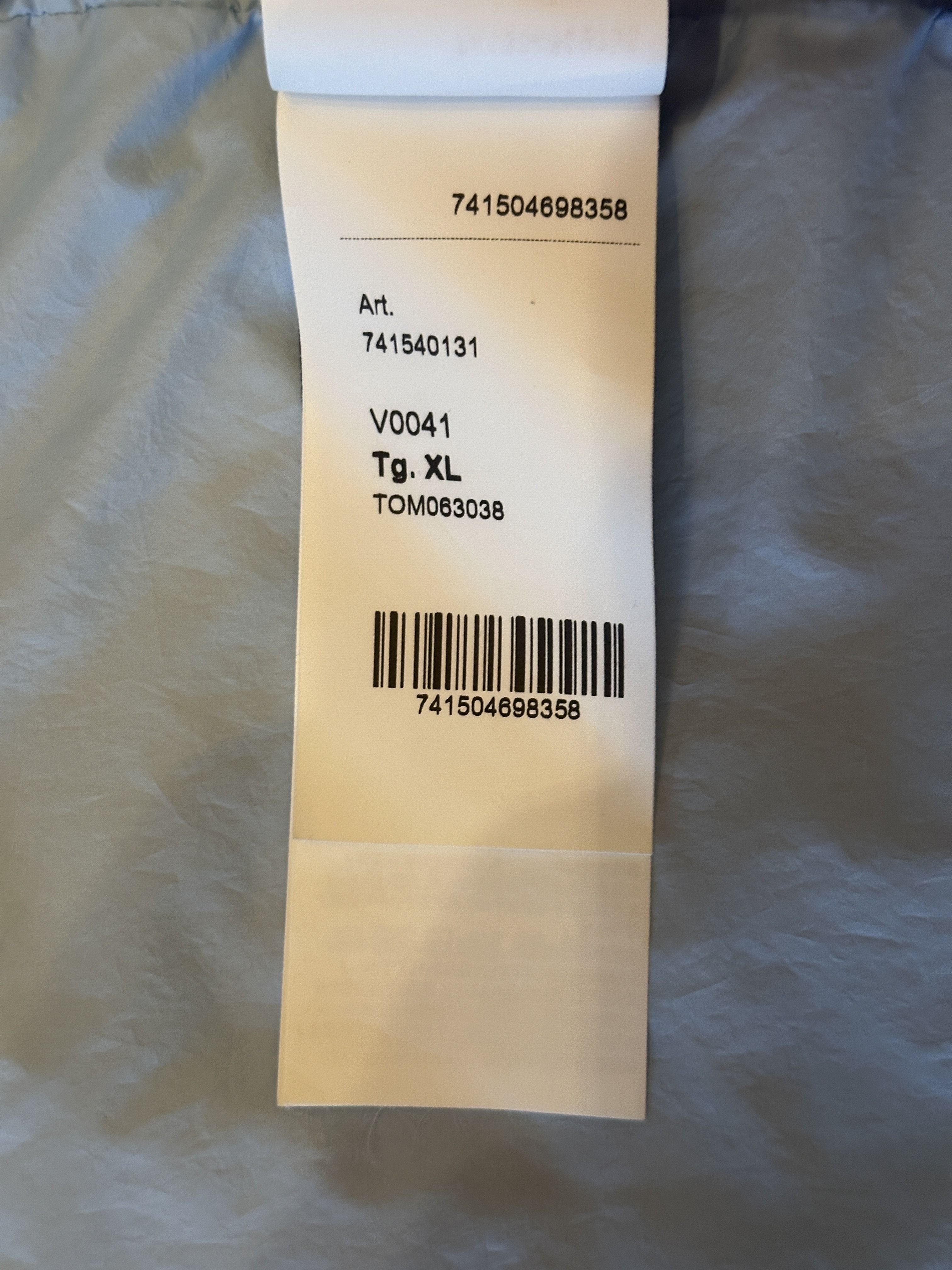
- Check the swing tag first. The ART Number appears on the tag attached to the garment at point of sale.
- Check the internal garment label as a second location if the swing tag is missing.
- On newer pieces, the code often begins directly with four digits.
- Write down or photograph the complete code before searching. A single digit transcribed incorrectly will pull the wrong archive result.
- Once you have the number, compare it against the garment's visible design and construction before drawing any conclusions.
A missing swing tag doesn't mean a garment is fake, but it does mean you'll need to rely more heavily on the internal label and physical checks.
Using the ART Number Checker
An ART Number checker lets you enter a product code and retrieve the corresponding season, garment category, and brand line details. Use it as an identification tool, not a final verdict on whether a piece is real.
- Locate the ART Number on the swing tag or internal label.
- Enter the complete code into the checker exactly as printed.
- Review the returned details: season, year, brand line, and garment type.
- Compare those details with the physical garment in front of you and with any photographs or description in the listing.
- Treat a match as a positive identification signal, not as proof of authenticity.
ART Numbers and Authenticity
What the ART Number can confirm.
- The season and year the code corresponds to.
- The brand line and garment category associated with that code.
- Whether the stated details of a listing match what Stone Island produced in that period.
What the ART Number cannot confirm.
- That the physical garment in front of you is a genuine Stone Island product.
- That the label, badge, or construction matches authentic examples from that season.
- That the code hasn't been copied onto a fake piece.
For pieces produced from Spring/Summer 2014 onwards, Certilogo is the authentication method the research supports. The Certilogo code sits on the garment label and connects to a verification system that's harder to replicate than a product code alone. Use it alongside the ART Number, not instead of physical checks.
Authentication Checks Beyond the Number
A complete Stone Island authentication review uses at least 5 areas of physical inspection. The ART Number is a starting point, not a finish line.

- Compass badge. Inspect the badge closely and compare its finish, stitching, and attachment method with genuine examples from the same season. The badge is one of the most commonly targeted details on counterfeit Stone Island.
- Check the main brand label for correct font, spacing, and print quality consistent with the garment's claimed year.
- Inspect the wash tag for accurate care symbols, country of origin, and material composition that matches the piece.
- Review the fabric weight, texture, and construction. Stone Island uses specific materials and finishes across each collection, and cheap substitutes often feel noticeably different.
- Check hardware and zips for quality and branding consistent with the garment model.
- Use Certilogo verification where the garment and season support it, particularly for pieces from SS2014 onwards.
No single check settles the question on its own. A garment that passes the ART Number check but shows inconsistencies in the badge, label, or fabric warrants closer inspection before you commit to a purchase. For a closer look at the specific details that separate genuine from fake, including real side-by-side photos of stitching, labels, and badge proportions, see our guide to spotting a fake Stone Island.
ART Number History and Format Changes
Stone Island has adapted its ART coding format across several decades of production. The brand was founded in 1982, and the product code system has evolved alongside it.
- Older and newer garments may use different code layouts.
- Newer pieces often begin with four digits, but that pattern does not apply cleanly to every era of Stone Island production.
- A changed format does not by itself indicate that a garment is not genuine. Older pieces simply predate the current system.
- Forcing an older garment into a newer four-digit reading can produce false mismatches that mislead buyers.
- When a code doesn't resolve clearly against a current format, use period-specific archive references rather than assuming the garment is incorrect.
If you're researching a vintage or older past-season piece, check the code against information from the relevant era rather than applying a single universal template.
Rarity and Desirability Signals
The ART Number can help establish where a garment sits in the Stone Island archive and how old it is. That's useful context when researching older or less common pieces.
- The code can confirm the production season and year, which helps date a garment accurately.
- Archive placement helps identify whether a piece belongs to a specific collection, sub-line, or limited run.
- Knowing the season and line can support research into how widely a piece was distributed at the time.
What the ART Number cannot do is establish rarity, desirability, or resale value on its own. Those factors depend on condition, design, provenance, and current market demand, none of which the product code addresses. Use the number as a starting point for research, not as a shortcut to a valuation.
Stone Island ART Number Key Takeaways
- The ART Number is Stone Island's product code, used to catalogue every garment by season, year, brand line, garment type, and colour.
- You can use it to compare a garment against known archive examples and check whether a listing's stated details hold up.
- Coding formats have changed over time. Don't apply a newer format to an older garment without checking period-specific references.
- The ART Number does not prove authenticity. A genuine match supports identification, nothing more.
- A safer review combines the ART Number with physical checks across the badge, label, wash tag, fabric, hardware, and Certilogo where applicable.
Browse Casual Quarter's authenticated Stone Island collection or check the brand's authenticity information before you buy.
Stone Island ART Number FAQs
Does an ART Number prove that a Stone Island garment is genuine?
No, an ART Number does not prove that a Stone Island garment is genuine. It identifies the garment and places it within the archive, but a counterfeit piece can carry a copied or plausible-looking code. Use the ART Number as an identification tool and combine it with physical checks and Certilogo verification.
Do Stone Island ART Number formats change over time?
Yes, Stone Island has adapted the ART coding format across decades of production. Older garments may use a different layout from current pieces, so a code that doesn't match a newer four-digit format isn't automatically a red flag. Compare older codes against period-specific archive references.
When should you use Certilogo instead of the ART Number?
Use Certilogo for authentication on Stone Island pieces from Spring/Summer 2014 onwards. The Certilogo code sits on the garment label and connects to a dedicated verification system. It's a stronger authentication method than the ART Number for garments from that season forward.
Does the ART Number checker work with C.P. Company garments?
Earlier C.P. Company pieces used closely related coding formats up to around 2010. Sportswear Company, run by Carlo Rivetti, owned and produced both labels together until it sold C.P. Company to FGF Industry in 2010, so the two brands shared overlapping coding logic for that earlier period. For C.P. Company pieces produced after that point, the ART Number system is specific to Stone Island.