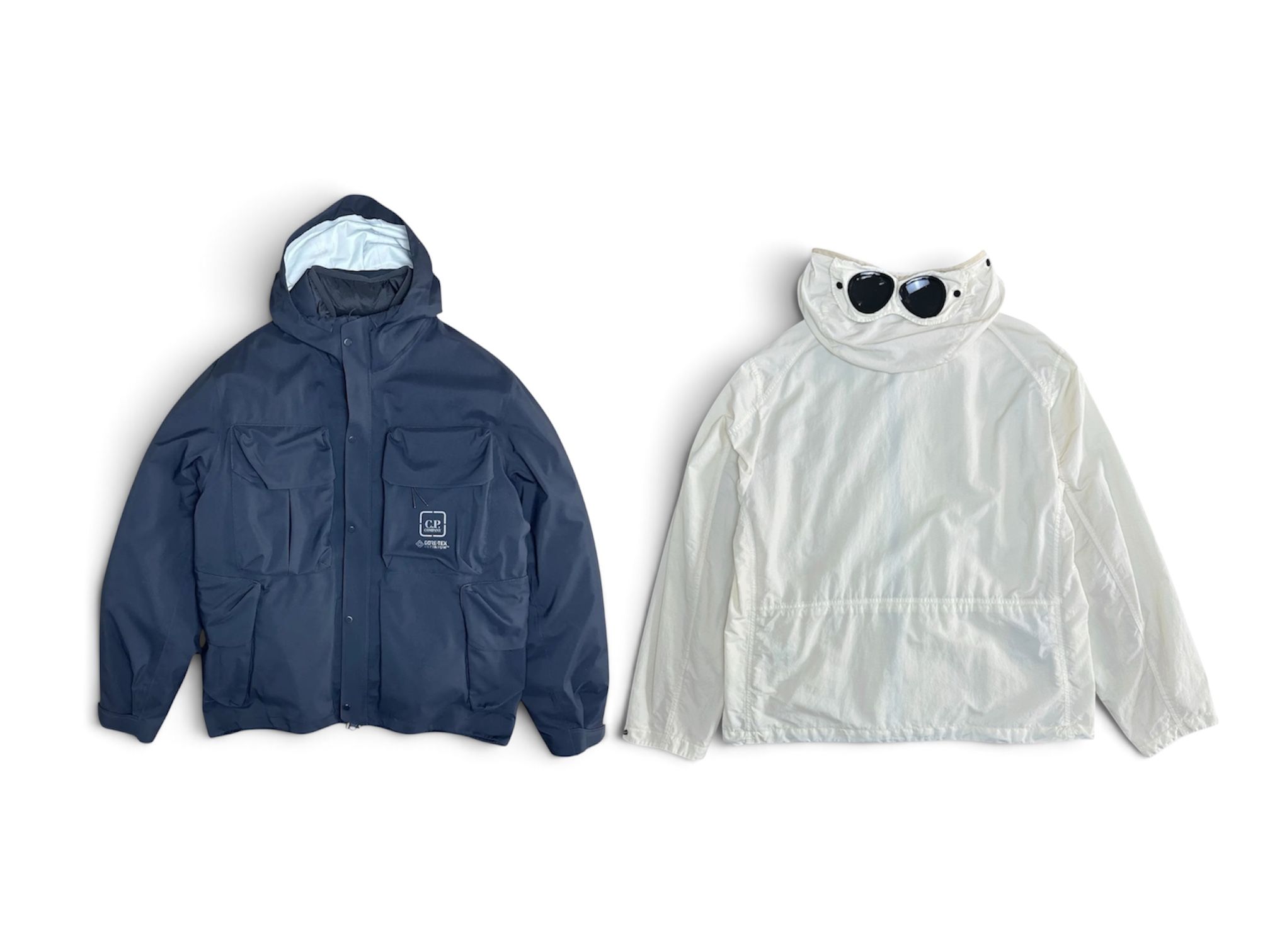
24 Best Jackets for UK Weather for Men: By Type
Written by Mariam Khubashvilii
In this article
- What Should You Look For in a Jacket?
- 1. C.P. Company Jackets
- 2. Parkas
- 3. Burberry Coats
- 4. Puffer Jackets
- 5. Wool Coats
- 6. Paul & Shark Jackets
- 7. Trench Coats
- 8. Pea Coats
- 9. Stone Island Jackets
- 10. Quilted Jackets
- 11. Shell Jackets
- 12. Insulated Rain Jackets
- 13. Hugo Boss Coats
- 14. Softshell Jackets
- 15. Technical Fleece Jackets
- 16. Down Jackets
- 18. Harrington Jackets
- 19. Bomber Jackets
- 20. Windbreakers
- 21. Raincoats
- 22. Faux Fur Coatsx
- 23. Mountain Equipment Jackets
- 24. Helly Hansen Jackets
- Conclusion: Finding Your Perfect Jacket
24 Best Jackets for UK Weather for Men: By Type
UK winters are not dramatic. They are just relentless. You get drizzle that lasts for days, wind that cuts through anything thin, and temperatures that sit in that grey zone where you're not cold enough to complain but cold enough to regret your jacket choice by lunchtime.
Most men solve this badly. They buy something that looks good in a shop, works fine for the first dry week of October, and then fails the moment November arrives. Or they go full waterproof and end up wearing something that looks like it belongs on a building site.
There is a better way to think about this. The right jacket for UK weather handles rain, holds warmth, and still looks like something you'd actually choose to wear. This guide covers the main jacket types, what to look for in each, and where designer brands fit into the picture.
What Should You Look For in a Jacket?
UK weather does not follow a schedule. You get rain in August, wind in March, and cold that sits at that awkward 5 to 10 degrees where you're not quite freezing but you will be if your jacket is wrong. Most men end up buying something that handles one condition well and fails at the other two.
A good jacket for UK conditions does three things: keeps rain out, holds warmth in, and does not feel like wearing a bin bag. Here is what to pay attention to before buying.
How Important Is Waterproofing in Jackets for UK Weather?
Waterproofing is the first thing to check. The UK gets rain across every season, so a jacket without it is not really a winter jacket at all.
Look for two specific features.
● Sealed seams stop water getting in through the stitching, which is usually the first place a jacket fails.
● A durable water-repellent (DWR) finish causes rain to bead and run off the surface rather than soak in.
Shell materials like Gore-Tex and similar laminate fabrics carry both reliably. Some designer brands, including C.P. Company and Paul & Shark, build their outerwear with water-resistant shells that handle British rain without the stiff, crinkly feel of cheaper waterproofs.
What Insulation Materials Work Best for Cold and Wet Conditions?
Down and synthetic fill are the two main insulation options, and they behave differently in wet weather.
Down offers a better warmth-to-weight ratio. A well-insulated down jacket keeps you warm at lower temperatures without feeling bulky. The trade-off is that down loses its insulating ability when it gets wet, so it needs a proper waterproof shell around it.
Synthetic fill, including PrimaLoft and similar materials, keeps insulating even when damp. It dries faster and costs less than down. For genuinely wet conditions, synthetic fill inside a waterproof shell is often the more practical choice.
The table below compares the two insulation types across the features that matter most for UK weather.
| Feature | Down | Synthetic Fill |
|---|---|---|
| Warmth-to-weight ratio | High | Medium |
| Performance when wet | Drops significantly | Stays effective |
| Drying time | Slow | Fast |
| Typical price point | Higher | Lower |
| Best for | Dry cold, layering | Wet and variable conditions |
What Other Jacket Features Matter for UK Winter?
Beyond insulation and waterproofing, three other things affect how a jacket performs day to day.
● Hood design. A structured, adjustable hood keeps wind and rain off your face without forcing you to hold it in place. A packable hood that disappears into the collar is useful in milder weather.
● Fit for layering. UK winters often need a base layer or midlayer underneath. If the jacket fits too slim at full retail sizing, size up one.
● Cuff and hem sealing. Velcro or ribbed cuffs stop wind from getting up the sleeves. A drawcord hem keeps the jacket close to the body in heavier rain.
These are not bonus features. They are the difference between a jacket that works and one that looks right but lets you down on a wet Tuesday in November.
1. C.P. Company Jackets
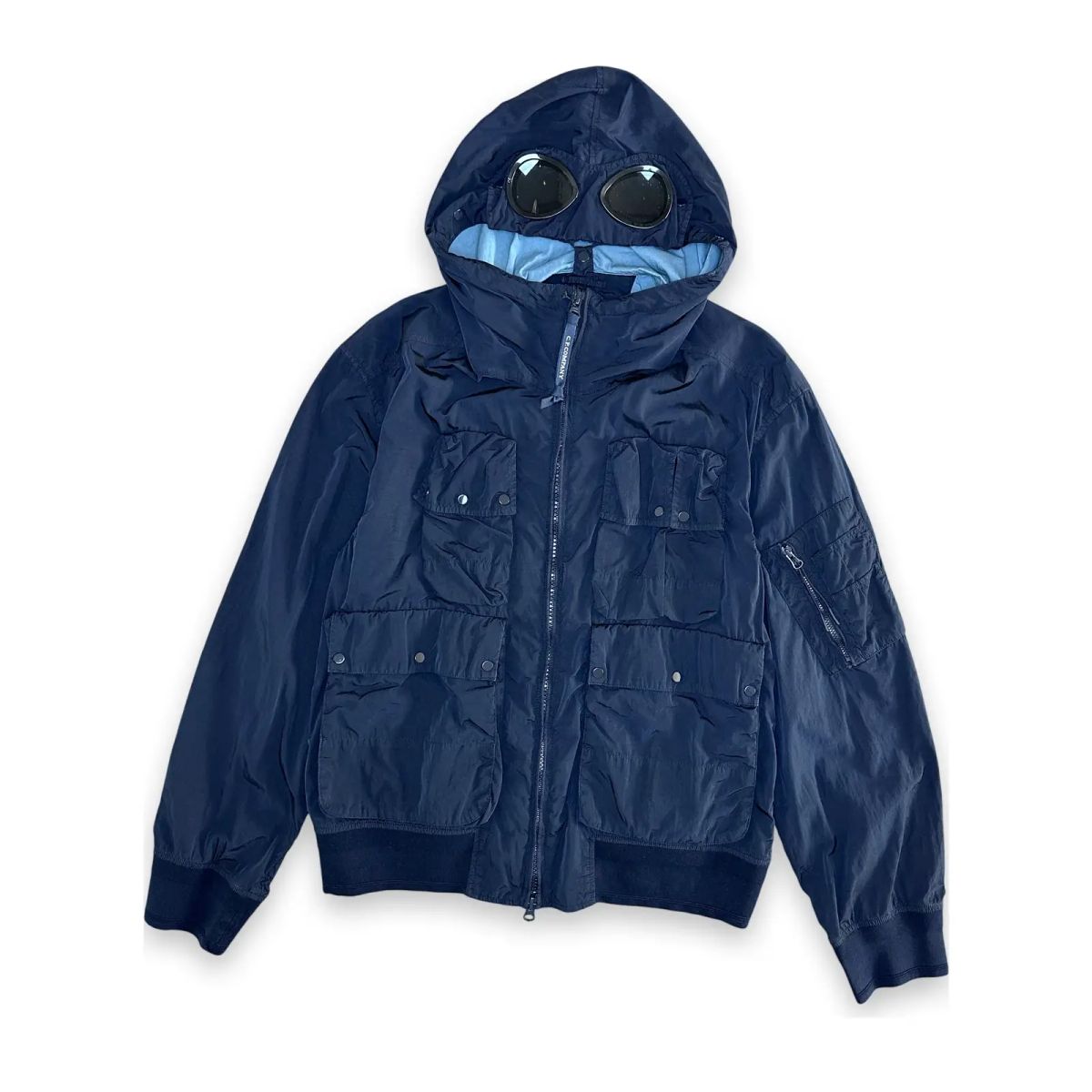
C.P. Company has been producing outerwear since 1971. The brand uses proprietary fabrics developed in-house, including Flatt Nylon and the Pro-Tek shell fabric, built to handle weather without sacrificing the aesthetic.
The Metropolis Series is the most recognisable range. The goggle hood gets most of the attention, but the shell construction is what makes it functional. The nylon sheds rain, the seams are clean, and the fit works for layering without looking technical. The goggle hood itself has a lens built into the hood brim that keeps wind and rain off the face, which is a genuinely useful feature rather than a design exercise.
C.P. Company outerwear sits well with the rest of a casual wardrobe. It does not require a specific outfit around it. Worn over jeans and a knit or a polo, it reads as considered without being loud.
Browse current C.P. Company stock at Casual Quarter, mostly past-season pieces at under retail price.
2. Parkas
Parkas are one of the most practical options for UK winter. The long cut covers more of your body than a standard jacket, which matters when rain is coming in sideways and you're waiting somewhere exposed.
Most parkas combine a waterproof or water-resistant outer shell with substantial insulation underneath, so they handle cold and wet at the same time rather than forcing you to choose between the two. The length also means your lower back stays covered when you're sitting down, which shorter jackets rarely manage.
The trade-off is bulk. A well-insulated parka is not a lightweight option, and it can feel like too much on a milder day. If UK winters are your main concern and you want one jacket that handles the worst of it, a parka is a strong answer. For anything more varied, it helps to have something lighter alongside it.
3. Burberry Coats
Burberry built its reputation on outerwear. The brand's gabardine fabric, a tightly woven cotton treated to repel water, was developed in the late nineteenth century and remains the material the trench coat range is built from today.
The construction is thorough. Storm flaps cover the zip and button placket, the sleeve straps allow the cuffs to close tightly, and the D-ring belt can be adjusted to seal the coat against wind. These are functional details, not decorative ones.
For UK weather, a Burberry trench coat works well from mid-autumn through winter on days where the temperature stays above zero and the main concerns are wind and rain. Pair it with a heavier knit underneath on colder days.
Past-season Burberry pieces at under retail price are available through Casual Quarter's coats and jackets collection.
4. Puffer Jackets
Puffer jackets trap heat efficiently because of how they're constructed. The quilted compartments hold fill, whether down or synthetic, in a way that creates consistent warmth across the jacket without adding significant weight.
For UK weather, the key question is what sits underneath the fill. A puffer with a water-resistant shell handles light rain well. Without that outer layer, the fill absorbs moisture and the jacket loses warmth quickly. Most quality puffer jackets now come with at least a DWR-treated shell, but it is worth checking before you buy.
They work well as a midlayer under a longer shell coat, or as a standalone jacket on colder but drier days. Brands like Stone Island produce puffer styles that sit closer to outerwear than purely technical pieces, which means you get the warmth without giving up the look.
5. Wool Coats
Wool coats handle cold well. Wool is a natural insulator, it breathes, and it does not hold odour the way synthetic fabrics can. A well-made wool coat can last years without showing significant wear, which makes the cost per wear on a quality piece much lower than it first appears.
The limitation in UK conditions is moisture. Wool absorbs water slowly, but it does absorb it. A light shower is usually fine. Sustained rain is not. A wool coat works well for city use on cold, dry days and short exposure to drizzle, but it is not the jacket you want when the forecast says heavy rain all day.
Hugo Boss produces structured wool and wool-blend coats that sit well on the body and carry enough weight to block wind. If you are looking for something that works in an office context as well as casual settings, a good wool coat covers both without compromise.
6. Paul & Shark Jackets
Paul & Shark produces outerwear from a sailing and maritime background, which means the construction standards are set around exposure to wind and water rather than simply looking the part. The brand has been building technical outerwear since the 1970s.
The Typhoon fabric, used across much of the outerwear range, is a technical membrane developed to meet the demands of open-water conditions. It handles strong wind and sustained rain without losing structure or feel. The same fabric appears on pieces designed for casualwear rather than sailing, which means you get the performance without the overly technical aesthetic.
Paul & Shark fits tend to run slightly roomier than Italian or French designer sizing, which suits layering well. A midweight knit or a fleece underneath sits comfortably without pulling the jacket out of shape.
7. Trench Coats
The trench coat was designed for exactly the conditions UK weather produces, and the basic design has not changed much since. A water-resistant outer shell, a belted waist that you can close against wind, and a length that keeps the rain off your legs.
Modern versions use lighter fabrics and often include a removable liner, which extends the coat across more of the year. Burberry's trench coats are the obvious reference point here, built from gabardine that sheds water and holds its shape over time. The house check lining is recognisable, but the construction underneath it is what makes the coat worth wearing in actual British weather rather than just carrying as a brand signal.
Trench coats work best in milder conditions, roughly 7 to 12 degrees, where the wind and rain are the main problem rather than serious cold. Add a knitwear layer underneath for anything colder.
8. Pea Coats
Pea coats come from naval outerwear, built to handle exposure on deck. The double-breasted front closes completely against wind, the heavy wool construction adds real warmth, and the shorter length means they move well without restricting you.
They wear better in cold, drier conditions than in heavy rain. The thick wool sheds light moisture but is not designed for sustained downpours. Where they work well in the UK is through autumn into early winter, when the temperature drops but the rain is not yet relentless.
The silhouette holds up across different settings. A pea coat works as well over a knitwear midlayer as it does over a shirt. It reads as smart without being formal, which covers a lot of the occasions UK winters actually involve.
9. Stone Island Jackets
Stone Island applies material research to outerwear in a way that most brands do not. The brand tests fabrics for specific properties, such as heat sensitivity, liquid-reactive dye, and reflective materials, then builds jackets around those properties rather than treating material as an afterthought.
The badge on the left sleeve functions as a product identifier as much as a logo. Each jacket carries an ART number that identifies its season, year and fabric type. For buyers who want to check a piece before buying, Casual Quarter's ART number checker decodes that information in seconds.
Stone Island outerwear handles UK weather well across most of the range. The shells are water-resistant as standard, the construction is clean, and the fit runs consistently across the sizing. The Nylon Metal and Membrana jackets sit at the more technical end. The Garment Dyed series offers a softer, more casual look with the same build quality underneath.
10. Quilted Jackets
Quilted jackets sit in a useful middle ground. They are warmer than a light shell but lighter than a full parka, and the quilted construction gives them a distinct look that works as well in casual settings as it does on colder days out.
The insulation in a quilted jacket is usually down or a synthetic equivalent, held in place by the stitched channels that give the jacket its texture. Warmth varies depending on the fill weight, so a lightweight quilted jacket is a good layering piece while a heavier one can work as a standalone in most UK winter conditions.
11. Shell Jackets
UK weather rarely commits to one thing. A dry morning can turn wet by noon, and a mild day can drop sharply once the sun goes. Shell jackets handle that kind of unpredictability well.
A shell jacket is a lightweight outer layer built to block wind and rain without adding bulk. Most pack down small enough to fit in a bag pocket, so you can carry one without thinking about it. That alone makes them one of the more practical choices for everyday wear in the UK.
The fabric does the work here. Good shell jackets use breathable materials that let moisture escape from the inside while keeping rain out. You stay dry from both directions, which matters when you're moving around rather than standing still.
They also work well as part of a layered setup. Wear a midlayer or a knit underneath and the shell sits over the top without restricting movement or adding unnecessary weight. When the weather improves, the shell comes off and packs away.
12. Insulated Rain Jackets
Insulated rain jackets combine two things that UK weather requires separately from most other climates: a waterproof outer shell and meaningful insulation underneath. Buying them together in a single jacket saves layering and cuts down the number of pieces you need to manage.
The shell handles rain and wind. The insulation, usually synthetic fill, keeps warmth in even when the outer layer gets wet. That combination works across a wide temperature range and suits the kind of unpredictable days the UK regularly produces.
The fit matters here more than with standard shells. Insulated rain jackets can run boxy if the insulation is thick, so it is worth checking the cut before committing. A slim-through-the-body fit reads better and layers more cleanly under a longer coat if needed.
13. Hugo Boss Coats
Hugo Boss outerwear generally sits between formal and smart-casual. The coats tend to use structured fabrics, including wool blends, technical wovens, and water-resistant materials, cut with a clean, fitted silhouette that works across office and casual settings.
For UK winters, the wool-blend topcoats handle cold and light rain with ease. The structured construction keeps the coat looking sharp after sustained wear, which is less consistent in cheaper wool-blend alternatives. The fit through the chest and shoulders is one of the stronger points of the Boss outerwear range.
For men who need a coat that moves between working days and weekends without requiring a change of outerwear, Hugo Boss coats cover that range cleanly.
14. Softshell Jackets
Softshell jackets use a stretch-woven or bonded fabric that moves with you rather than restricting your range of motion. They handle wind reliably and cope with light rain without saturating, which covers most of what the UK throws at you outside of heavy downpours.
They are not full waterproofs. In sustained rain, water will eventually work through a softshell. But for everyday use across autumn and into winter, they cover a lot of ground without the stiffness that comes with hard-shell alternatives.
The comfort factor makes them easy to wear for extended periods. Unlike more technical outerwear, a softshell does not feel like you're dressed for an expedition. It sits well over a knit or a shirt and moves naturally throughout the day.
15. Technical Fleece Jackets
A technical fleece jacket earns its place as a midlayer more than as a standalone piece. The fabric traps warm air close to the body while allowing moisture to move outward, which means you stay warm without overheating during activity.
The best use in UK winters is underneath a shell or rain jacket. The fleece handles warmth and moisture management, the outer layer handles wind and rain. Worn together, the combination covers conditions that neither piece would manage effectively alone.
On milder, dry days, a heavier technical fleece works as a standalone piece without feeling excessive. The construction is noticeably different from standard high-street fleeces, particularly in how the fabric sits and holds its shape after repeated wear.
16. Down Jackets
Down jackets produce serious warmth for very little weight. A well-constructed down jacket filled with high-loft down, rated at 600 fill power or above, keeps you warm at temperatures where most other jackets start to fall short.
The issue in UK conditions is moisture. Down clumps when it gets wet and loses most of its insulating ability until it dries fully. A down jacket needs either a water-resistant outer shell or a separate waterproof layer over the top to work in British weather.
When the outer layer manages moisture correctly, down is one of the most effective insulation options available. The compressibility is also worth noting. A good down jacket packs into its own pocket or a small stuff sack, which makes it useful to carry even when you are not wearing it.
18. Harrington Jackets
The Harrington is a short, lightweight jacket with a clean silhouette and a tartan-lined interior. It originated in the 1930s, became a staple of British casual culture through the following decades, and has not changed much in the years since. That consistency is part of why it still reads well.
It is not a cold-weather jacket. The construction is too light for serious UK winter temperatures, and it does not handle rain well. Where it works is in the shoulder seasons, autumn and spring, over a heavier knit or worn on milder winter days where the temperature stays above 10 degrees.
The appeal is the simplicity. A Harrington in navy, khaki, or a classic tan does not need much else around it. It fits over a crew-neck knit as well as it does over a shirt.
19. Bomber Jackets
The bomber shares some of the Harrington's limitations in terms of warmth, but the construction tends to be heavier, and many modern versions include insulated linings that extend the usable temperature range.
A well-built bomber in a nylon or ripstop shell handles wind and light rain without issue. The ribbed cuffs and hem create a close seal that stops cold air getting in, which matters more than most people expect on windy days.
Stone Island and C.P. Company both produce bomber-style jackets that sit above the standard high-street version in terms of material quality and construction. The fits run slim through the body, they layer over a knit without looking oversized, and the shell fabrics carry DWR treatment as standard.
20. Windbreakers
A windbreaker solves one specific problem: wind. The shell is usually lightweight nylon or polyester that does not breathe particularly well but blocks wind completely and sheds light rain.
The practical case for owning one is portability. Most windbreakers pack into a chest pocket or a small pouch, which means you can carry one all day without noticing it. For autumn and into winter, that packability makes them useful as a backup layer when the forecast changes.
On their own, windbreakers are not warm jackets. Over a midlayer or a knit, they add meaningful protection against the kind of exposed, windy days the UK regularly delivers.
21. Raincoats
A proper raincoat is built around one priority: keeping you dry. The shell is fully waterproof, seams are taped or welded, and the cut is usually long enough to cover the upper legs.
Breathability varies. Cheaper raincoats use impermeable membranes that stop all air movement, which keeps rain out but makes you sweat heavily in anything more than light activity. Better versions use breathable waterproof fabrics that manage moisture from the inside while keeping rain out.
For everyday UK use, a mid-length raincoat with a breathable membrane and a proper hood covers most situations. Paired with an insulating layer underneath on colder days, it works across a wide temperature range without requiring multiple separate pieces.
22. Faux Fur Coatsx
Faux fur coats do not perform technically the same way as a waterproof shell or an insulated parka. What they offer is warmth through volume (the thick pile traps air effectively) and a look that works for evenings out or occasions where the goal is to dress up rather than dress for the weather.
For UK winters, faux fur is better suited to short outdoor exposure, moving between venues, getting in and out of a car, rather than sustained time in rain or wind. Keep something more weather-resistant available for longer outdoor stretches and wear the faux fur when the evening justifies it.
23. Mountain Equipment Jackets
Mountain Equipment designs outerwear for genuine mountain conditions, which means the technical specifications exceed what most UK winters actually require. The shells are fully waterproof, built mainly around GORE-TEX membranes alongside the brand's own Drilite laminate range, the seams are taped throughout, and the insulation options include high-loft down for serious cold.
The relevance in a UK context is durability and weather performance. A jacket built to handle Scottish highlands conditions in February manages rain and wind in most British cities without difficulty. The construction standards are consistent across the range and built to last across seasons.
The aesthetic is more overtly technical than designer casualwear brands. That suits some contexts better than others. If weather performance is the priority and style is secondary, Mountain Equipment sits at the reliable end of the market.
24. Helly Hansen Jackets
Helly Hansen has been producing outerwear for seafarers since 1877. The brand's Helly Tech membrane technology appears across the waterproof range and provides full waterproofing alongside a meaningful breathability rating, which separates it from simpler impermeable shells.
The Odin and Verglas series sit at the more technical end of the range, built for mountain conditions. The urban series, including the Vancouver and Dubliner jackets, apply the same waterproofing in cuts that work for everyday wear without looking like hiking gear.
For UK weather specifically, Helly Hansen's mid-range outerwear offers a high waterproofing standard at a price point below most technical mountaineering brands. The brand's Nordic origins mean the products are calibrated for exactly the kind of cold, wet, and windy conditions the UK produces.
Conclusion: Finding Your Perfect Jacket
There is no single best jacket for UK weather because UK weather does not stay still. You need something different for a cold January commute, a wet October weekend, and a windy but dry afternoon in March.
The most practical approach is to own two pieces that cover the range: one jacket with solid waterproofing and insulation for colder, wetter days, and a lighter shell or softshell that handles the middle ground. Both should be built well enough to last several seasons.
If you are spending money on outerwear, designer brands at under retail price close the gap between cost and quality. Brands like C.P. Company, Stone Island, Burberry, Paul & Shark, and Hugo Boss produce jackets that handle real weather, wear well over time, and look good doing it.
Browse current stock in the Casual Quarter coats and jackets collection. Most pieces are past-season, all are genuine, and all are priced under retail.