Where Does Stone Island Actually Come From?
Geschreven door Frank Struik
In dit artikel
- What is Stone Island?
- Osti's design legacy
- Tela Stella origins
- Military and workwear influences
- Technical fabric innovation
- The compass badge
- Football casual culture
- From subculture to high fashion
- Moncler ownership era
- Collections and functional design
- Changing cultural perceptions
- Stone Island origin key takeaways
- Stone Island origin FAQ
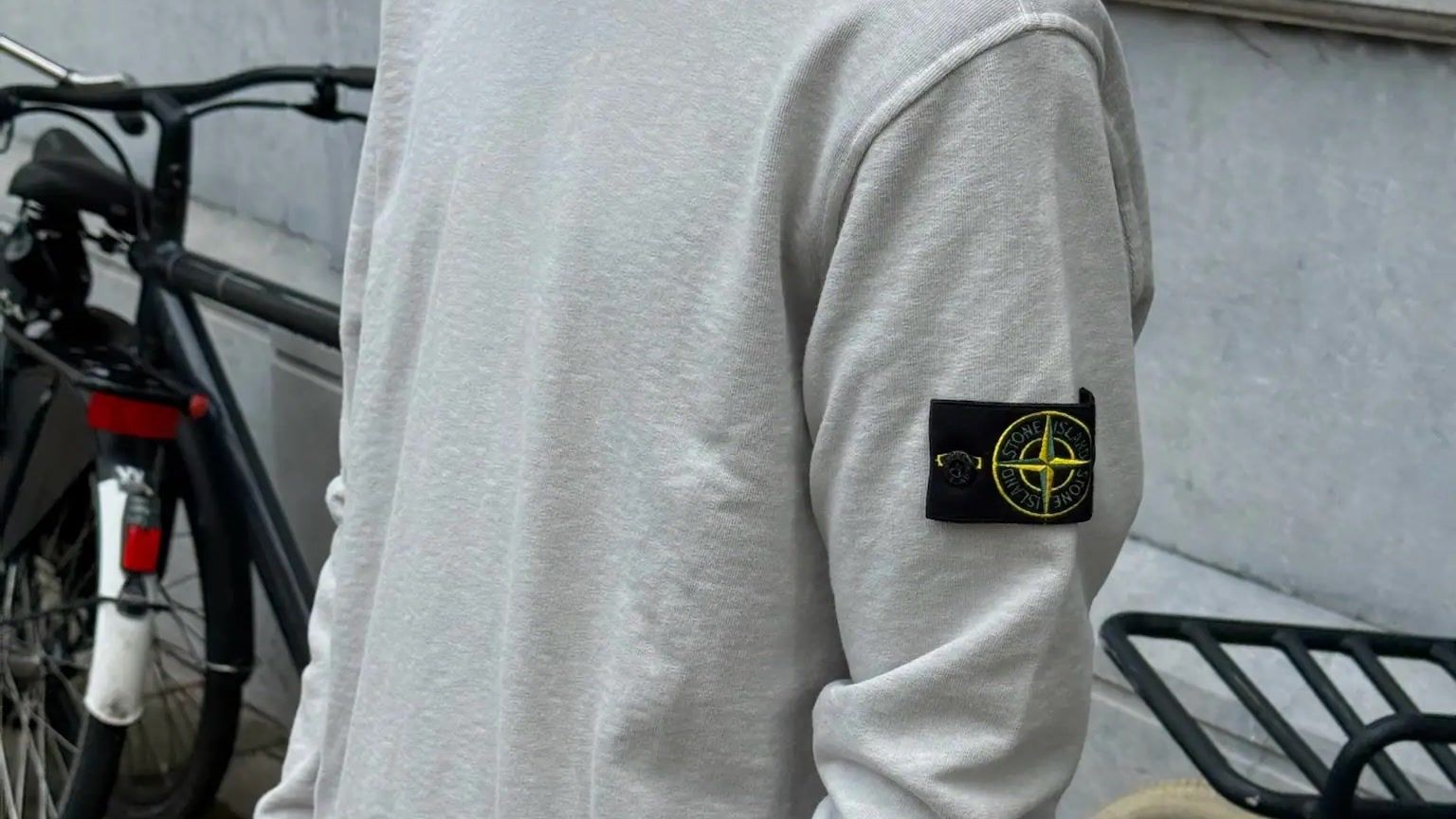
You know the badge. The compass rose on the sleeve, the garment dyed in colours that shift with heat or light. But most people wearing Stone Island today couldn't tell you where it came from, who built it, or why it looked so different from everything else on the market when it first appeared.
That gap matters. Stone Island didn't grow out of a luxury fashion house or a sportswear conglomerate. Massimo Osti founded it in 1982 as a direct extension of his obsession with military fabrics and industrial dyeing techniques. The brand's first jacket was made from a resin-coated, stone-washed cotton canvas originally developed for truck tarpaulins. That's not a marketing story. That's how it actually started.
And yet, within a decade, Stone Island had found its way onto the terraces of English football grounds, into the closets of Milanese designers, and eventually into the wider conversation about what streetwear could mean culturally. Understanding where Stone Island came from explains why the brand still carries a weight that most labels spend millions trying to manufacture. This article covers the founding history, the design philosophy Osti built from scratch, and how a niche Italian label became a fixture in global subculture, now owned outright by one of Europe's biggest luxury groups.
What is Stone Island?
Stone Island is an Italian outerwear brand built around technical fabric development rather than seasonal trends. It is best known for the removable compass badge on the left sleeve, garment-dyed colours that shift subtly with light and stress points, and a design process that starts with the material rather than the silhouette.
It sits at an unusual crossroads: a fixture of English football terrace culture since the 1980s, a reference point in Milanese design circles, and, since 2020, part of the same corporate group as Moncler.
This article covers the founding of Stone Island, the designer behind it, and how a single experimental garment led to one of the most recognisable brands in menswear.
Osti's design legacy
Massimo Osti founded Stone Island in 1982, but the groundwork came earlier. Before Stone Island existed, Osti built C.P. Company, a label he launched in 1971 under the name Chester Perry, renamed in 1978 after a legal challenge from Chester Barrie and Fred Perry. That earlier project gave him a working methodology: treat garment construction the way an engineer treats a problem. Study the material, push its limits, and let the result determine the design.
Osti's interests ran toward science, maritime culture, and the sea. He studied how fabrics aged, how they responded to heat and pressure, and how industrial treatments could change a garment's character entirely. Those interests weren't decorative. They fed directly into the decisions he made about construction, finishing, and function.
When he separated Stone Island from C.P. Company in 1982, he brought that engineering mindset with him. The two labels shared a parent company but developed distinct identities. C.P. Company leaned into a cleaner, more refined aesthetic. Stone Island became the experimental arm, the label where Osti tested materials that had no obvious precedent in fashion at the time.
Tela Stella origins
The debut Stone Island collection in 1982 centred on a single fabric: Tela Stella. Translated literally, the name means "star fabric." The material was a heavy cotton canvas coated on both sides in contrasting pigmented resins, then put through an intensive enzyme stone-wash to break down its density and give it a faded, worn look. Osti sourced the base canvas from a factory making truck tarpaulins.
The result looked nothing like conventional fashion at the time. The fabric was stiff, textured, and visibly functional, with an almost reversible two-tone character from the contrasting resin coats. It gave garments a sculptural quality that felt closer to protective workwear than to anything sitting in an Italian fashion showroom in 1982. That first collection ran to seven jackets in six two-tone colourways, and reportedly sold out within ten days.
That first collection established the brand's logic from the start. Stone Island would source materials based on their technical properties, not their fashion credentials. The garment was built around the fabric, not the other way around.

Military and workwear influences
Stone Island's early collections drew directly from two sources: military uniform construction and traditional workwear. Both informed how the brand thought about garments.
Military influences showed up in the cut and construction. Pockets placed for access rather than appearance. Closures designed for function under pressure. Layering built to manage temperature rather than to layer aesthetically. Osti studied military clothing the way a historian studies documents, looking for design decisions made under constraint and then applying that logic to civilian outerwear.
Workwear added a different kind of reference. Factory clothing, boiler suits, industrial overalls. Garments made to take physical punishment. Stone Island borrowed the visual language of utility without simply copying it. The brand used workwear as a starting point for experimental manufacturing, taking familiar forms and pushing them through industrial treatments that changed both their appearance and their behaviour.
Technical fabric innovation
Technical material development became Stone Island's clearest signature. Where other brands updated seasonal colours or adjusted silhouettes, Stone Island changed what its garments were made of.
The Ice Jacket is one of the most cited examples. It uses a thermo-sensitive coating that changes colour as the temperature drops. Wear it in the cold and the garment shifts visually. Wear it in the warm and it returns to its original state. The effect is not cosmetic. It reflects an actual material response to environmental conditions.
Nylon Metal is another landmark fabric in the brand's archive. It incorporates a metallic wire woven into the textile, giving the finished garment a reflective, almost industrial surface quality. The material behaves differently from standard nylon: it holds its shape more rigidly, catches light in a specific way, and ages with a character that standard synthetic fabrics do not develop.
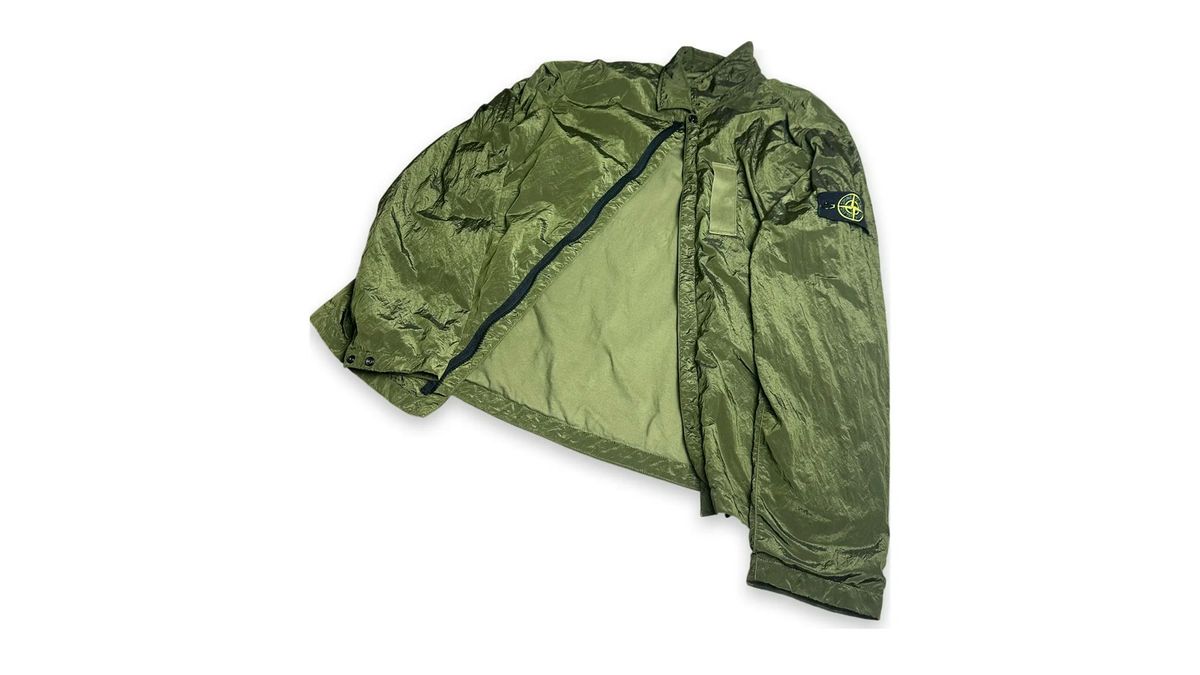
Reflective fabrics appeared across multiple collections, using light-reactive coatings that sit dormant in daylight and become highly visible under direct flash or artificial light. All three of these innovations came from the same approach Osti established in 1982: the fabric decides what the garment becomes.
The compass badge
The Stone Island compass badge sits at the centre of the brand's visual identity. It features a compass rose paired with a nautical star, both long-standing symbols from maritime navigation and military insignia. The design traces back to the wind rose compass on Osti's own sailboat, a detail that ties the badge directly to his personal interest in the sea rather than a boardroom branding exercise.
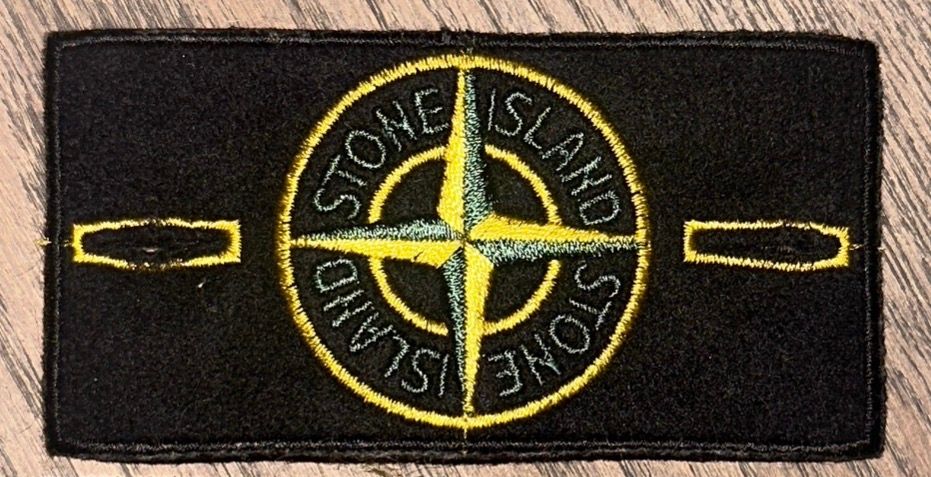
The badge is removable. That detail is deliberate and often misunderstood. It was not designed so the badge could be hidden. It was designed so the garment could be washed without damaging the embroidered patch. The practical reason and the symbolic effect turned out to be the same: the badge became something you chose to wear rather than something printed onto the fabric permanently.
Nautical and military insignia carry a specific visual weight. They suggest utility, rank, and the kind of durability associated with working environments rather than fashion ones. Osti drew on that history. The compass badge connected Stone Island's outerwear to the maritime and military references running through the collections, and it gave the brand a mark that read as genuinely technical rather than decorative, which is also part of why fakes struggle to replicate it convincingly. See our guide on how to spot a fake Stone Island if you want the full checklist.
Football casual culture
Stone Island's connection to football culture wasn't planned. It grew organically through the casual movement of the 1980s, when a generation of English and European football supporters started arriving at grounds in expensive European sportswear instead of scarves and replica shirts.
The logic of the casual look was about wearing labels that most people in your town hadn't seen yet. Stone Island fitted that logic precisely. It was Italian, relatively unknown outside specialist fashion circles, visually distinctive, and expensive. For young men looking for something that signalled taste rather than tribal allegiance, it was exactly right.
By the mid-1980s, Stone Island appeared regularly on the terraces of English football grounds. The 1992 European Championships in Sweden added a specific cultural moment. Stone Island was visible across supporter groups from multiple countries, and photographs from that tournament documented the brand as part of a recognisable look. The connection stuck. It shaped how a generation of men in the UK and across Europe understood the brand, and it built a loyalty that survived multiple ownership changes and price increases over the following decades.
From subculture to high fashion
Stone Island spent most of the 1980s and 1990s as a brand known to a specific audience. Outside football culture, Italian fashion circles, and the networks connecting them, it was not widely recognised. That changed gradually, then quickly.
Celebrity visibility played a role. Musicians associated with grime, hip-hop, and UK street culture began wearing Stone Island in the mid-2000s. That shifted the brand's cultural coordinates without erasing its original associations. The football audience remained. A new audience found the label through different routes.
The 2014 collaboration with Supreme accelerated global recognition. Supreme's audience at that point was predominantly American and streetwear-focused. Many of its followers had no prior knowledge of Stone Island. The collaboration introduced the brand to that audience in a format they already trusted, and it reframed Stone Island as a label relevant to streetwear culture rather than exclusively to European terrace fashion.
By the late 2010s, Stone Island appeared regularly in conversations about luxury streetwear, technical outerwear, and high fashion. The brand had not changed its design methodology. The audiences describing it had changed around it.
Moncler ownership era
Moncler agreed in December 2020 to take full ownership of Stone Island's parent company, Sportswear Company SpA, in a deal valuing the business at €1.15 billion: 70% bought from founder-family CEO Carlo Rivetti, and the remaining 30% from Singapore's Temasek Holdings. The transaction closed in March 2021, bringing Stone Island under the same ownership as one of Europe's most recognised luxury outerwear brands and changing the commercial context the label operated in.
Pricing shifted upward after the acquisition. Retail prices on core outerwear pieces rose across subsequent seasons, with some pieces increasing sharply compared to pre-acquisition retail. Moncler positioned Stone Island within a broader luxury framework, which meant the brand's pricing structure moved closer to luxury outerwear competitors than to its earlier technical sportswear positioning.
Perceptions of quality are contested in this period. Some longer-standing buyers note that materials and construction remain consistent with the brand's technical standards. Others point to price increases outpacing any observable improvement in quality. Both views appear in the market. What is clear is that Moncler's ownership gave Stone Island significantly greater distribution and global retail reach, while moving the brand's price point firmly into luxury territory.
Collections and functional design
Stone Island organises its product around several recurring lines, each carrying the brand's functional design philosophy into a specific direction.
The Ghost collection is the most visually distinctive of these. It presents garments in a single, consistent tone: the label, the lining, the badge, and the outer fabric are all rendered in the same colour. Ghost pieces remove almost all branding contrast from the garment. The result is a cleaner silhouette that wears more like considered tailoring than technical outerwear, though the construction underneath stays consistent with Stone Island's engineering approach.
Technical materials run across all collections, not only the more experimental archive pieces. Garment dyeing, applied after construction rather than before, means the dye penetrates seams, stitching, and hardware as well as the outer fabric. The finished piece carries colour in a way that standard pre-dyed garments do not, with subtle variation at stress points and seams. That process connects every collection back to the same material logic Osti established in 1982.
Changing cultural perceptions
Stone Island began as technical outerwear for a niche audience. It is now read differently by several distinct groups simultaneously, and those readings do not always overlap.
For the generation that found the brand through football culture in the 1980s and 1990s, Stone Island carries a specific meaning tied to that history. The badge signals membership in something that predates luxury fashion's interest in the label. That meaning is real and persists.
For a younger audience that discovered Stone Island through streetwear, collaborations, or social media, the brand reads primarily as a high-status technical label. The football connection may be known but is not the main reason for wearing it.
For the luxury fashion market, Stone Island sits alongside technical outerwear brands at the upper end of the price spectrum. The Moncler acquisition formalised that positioning commercially.
All three readings coexist. The brand's identity is wide enough to carry them. What holds them together is the same thing that distinguished Stone Island in 1982: the product itself, built from materials and processes that most labels do not attempt.
Stone Island origin key takeaways
Stone Island was founded in 1982 by Massimo Osti in Ravarino, Italy. It grew directly from his earlier work with C.P. Company and from a design philosophy built around material experimentation rather than seasonal trends.
The brand's first collection, Tela Stella, used a resin-coated, stone-washed cotton canvas sourced from truck tarpaulin manufacturing. That starting point set the template for everything that followed. Military and workwear references shaped the brand's visual language. Technical fabric development, from the colour-changing Ice Jacket to Nylon Metal, became its clearest ongoing signature.
The compass badge connected the brand's identity to maritime and military iconography. Football casual culture in the 1980s gave Stone Island its first mass audience outside Italy. A 2014 collaboration with Supreme expanded global recognition. Moncler's €1.15 billion acquisition, agreed in December 2020 and completed in March 2021, moved the brand into luxury positioning and full Moncler ownership.
The design logic has stayed consistent across all of it. The fabric leads. The garment follows.
Stone Island origin FAQ
Who founded Stone Island?
Massimo Osti founded Stone Island in 1982. He was an Italian designer based in Ravarino, near Modena in Emilia-Romagna, who had previously built C.P. Company and brought the same engineering-led design approach to Stone Island.
When was Stone Island founded?
Stone Island was founded in 1982. The first collection, Tela Stella, debuted the same year using a resin-coated, stone-washed cotton canvas developed from truck tarpaulin material.
What is the connection between Stone Island and C.P. Company?
Both brands were created by Massimo Osti. C.P. Company came first, launched in 1971 as Chester Perry before being renamed in 1978. Stone Island was separated from C.P. Company in 1982 and became the more experimentally focused of the two labels.
Why did Stone Island become popular in football culture?
Stone Island's visual distinctiveness, Italian origin, and high price made it attractive to the casual movement in 1980s British and European football. Supporters wore expensive, unfamiliar European brands as a form of style identity. Stone Island fitted that logic precisely.
What makes Stone Island fabrics different?
Stone Island develops fabrics that respond to external conditions. The Ice Jacket changes colour with temperature. Nylon Metal incorporates metallic wire into the textile. Garment dyeing is applied after construction, so colour penetrates seams and hardware as well as the outer fabric.
Who owns Stone Island now?
Moncler owns Stone Island outright. The deal was agreed in December 2020 and closed in March 2021, with Moncler buying 70% from founder-family CEO Carlo Rivetti and the remaining 30% from Singapore's Temasek Holdings, valuing the business at €1.15 billion in total. Stone Island continues to operate as a distinct label under Moncler's ownership.