Where Is Burberry Made? Factories, Countries, and Labels Explained
Geschreven door Frank Struik
In dit artikel
You pick up a Burberry piece and the label says Made in China. Or Made in Italy. You were expecting Made in England, and now you're not sure what to think. Is it genuine? Is the quality different? Does the country of origin even matter?
It's a reasonable thing to wonder. Burberry carries one of the strongest British identities in fashion, so a label that points somewhere else can feel like a contradiction. It isn't. Burberry manufacturing locations span several countries, and that's been true for years. A Made in China label on a Burberry item does not mean it's a fake or a lesser product.
This guide breaks down where Burberry makes its products, which categories come from which countries, what British craftsmanship actually means in practice today, and how to read a label without talking yourself into the wrong conclusion.
Where Is Burberry Made?
Burberry products are made in several countries, including England, Scotland, Italy, and China. The label on any individual piece reflects where that specific product was manufactured, not a single blanket origin for the brand.
That distinction matters. A Burberry coat, scarf, or bag can carry a different country of origin depending on the product line and production facility. None of those labels make the item less authentic.

Burberry's manufacturing locations break down roughly like this.
Where are Burberry coats made?
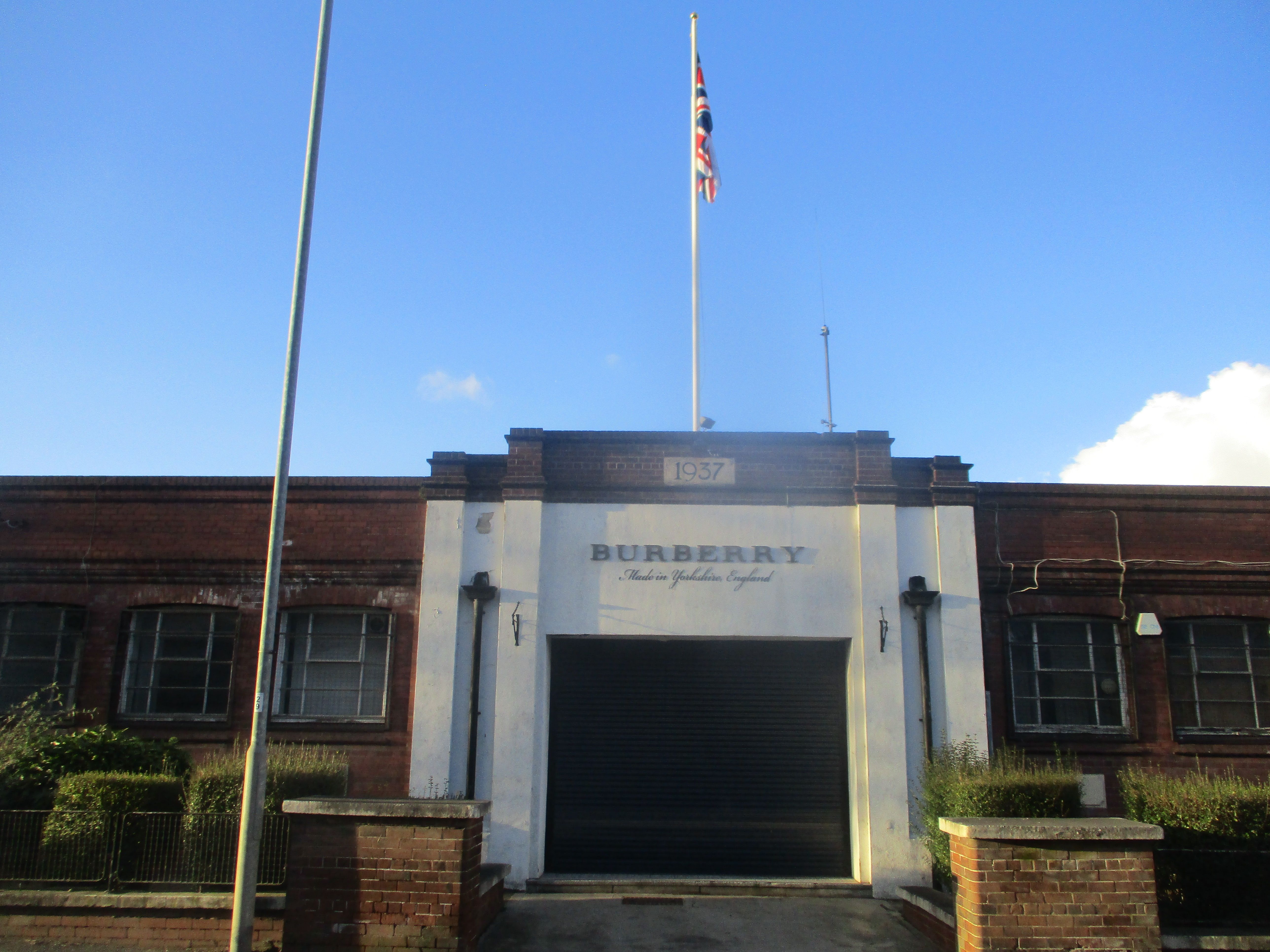
Burberry maintains 2 UK factories: Castleford Mill and Keighley Mill, both in Yorkshire. Heritage outerwear, particularly the trench coat, has long been associated with British production at these sites. That said, not every coat in the range comes from a Yorkshire mill, so the label on your specific piece is always the definitive answer.
Where are Burberry scarves made?
Burberry scarves, including the iconic check designs, are largely associated with Scottish production. The fine weave and quality of those pieces reflects a tradition of textile manufacturing in Scotland that Burberry has drawn on for decades.
Where are Burberry bags made?
Burberry bags and leather goods are frequently produced in Italy, where the brand uses established leather manufacturing expertise. Italy has a long-standing role in luxury goods production, and Burberry's use of Italian factories for accessories follows a pattern common across the sector.
What about Burberry products made in China?
Yes, some Burberry products are made in China, and a "Made in China" label on a Burberry item does not indicate a fake. Burberry, like most major fashion houses, uses a global production network. The country of origin reflects the manufacturing location for that specific product, nothing more.
The table below summarises what the sources confirm about Burberry's main manufacturing locations and associated product categories.
| Country | Associated Products |
|---|---|
| England (Yorkshire) | Heritage outerwear, trench coats |
| Scotland | Woven scarves, check accessories |
| Italy | Bags, leather goods |
| China | Various product lines |
If you're shopping Burberry and want to check what's currently available, browse the Burberry collection at Casual Quarter for current and past-season pieces at under retail price.
Burberry's Main Manufacturing Locations
Burberry's production network covers 4 main regions, each associated with specific parts of the range. The sources do not provide an exhaustive product-to-factory map, so what follows reflects what has been confirmed rather than a complete account of every line.
- England (Yorkshire) supports Burberry's British manufacturing heritage. Castleford Mill and Keighley Mill are the 2 reported UK factories, and both have operated for decades.
- Scotland connects with Burberry's cashmere scarf production, drawing on the country's established textile tradition.
- Italy, specifically the Scandicci area near Florence, supports leather goods and fashion production. Scandicci is a well-known centre for Italian luxury leather manufacturing.
- China forms part of Burberry's global production base and supplies various product lines across the range.
Product Lines by Location
Manufacturing location varies by product, and the research does not confirm a fixed rule for every line. The clearest verified connection involves Burberry's Heritage Trench and Car Coats, which feature in the Trench for Tomorrow initiative and are associated with British production. Scottish production connects with cashmere scarf manufacturing, and Italian production at Scandicci is associated with leather goods more broadly.
For any specific item, the sewn-in label gives the most direct and reliable information.
- The Heritage Trench and Car Coats appear in Burberry's Trench for Tomorrow programme, which focuses on lower-impact materials and is linked to British production.
- Cashmere scarves carry a Scottish production association, reflecting Scotland's textile heritage.
- Leather goods and accessories are broadly connected with Italian production, particularly in Scandicci.
- Products made in China appear across the range and are not limited to a single category.
Craftsmanship and Quality
Quality in a Burberry piece comes from materials, construction, and the skills built around specific products rather than from a single country label. The manufacturing location matters less than what happens inside the factory.
A few concrete details illustrate that.
- Specialist collar stitching on Burberry outerwear reportedly takes up to a year to master, per accounts from inside the Castleford workshop.
- Burberry has operated its dedicated Castleford manufacturing site for more than 50 years.
- Burberry coats use signature cotton gabardine, a tightly woven, water-resistant fabric Thomas Burberry invented in 1879.
- Burberry's cotton gabardine is reportedly woven from 100% organically grown cotton, though this may vary by specific product line.
The gabardine point is worth holding on to. The fabric construction is what gives a Burberry trench its structure and weather resistance. That stays consistent regardless of where the coat was assembled.
Made in Labels and Authenticity
A "Made in China" label on a Burberry item does not automatically mean it is a fake. Authentic Burberry products are manufactured in China as part of the brand's standard global production network. Treating country of origin as a standalone authenticity test will lead you to the wrong conclusion.
Use the label alongside these additional checks.
- Inspect the neck tag for inconsistencies. On counterfeit coats, the neck tag is one of the most common places where details slip, including font weight, spacing, and stitching quality.
- Check the BURBERRY logo. On a genuine coat, the lettering should appear thick and tightly spaced. Thin or unevenly spaced lettering is a warning sign.
- Look up the model name and compare it against Burberry's official product archive or current range. Fakes often use names that don't match any real product.
- Cross-reference the article number. Genuine pieces carry an 8-digit article number on the label. Search it on Burberry.com or more broadly to confirm it matches a real product and colourway. Burberry doesn't run a dedicated checker tool for this, so it's a manual lookup, not an automated one.
No single check is conclusive on its own. Use several together.
Sustainability and Traceability
Burberry has connected its manufacturing work with wider commitments on materials and supply-chain accountability. The targets below are stated goals, not completed results, and are attributed to Burberry's own reporting.
- The Trench for Tomorrow initiative applies to Heritage Trench and Car Coats and focuses on sourcing lower-impact materials for those specific lines.
- Burberry's cotton gabardine is reportedly woven from 100% organically grown cotton, though this may vary by specific product line.
- Burberry has committed to cutting absolute scope 3 (supply-chain) emissions by 46% by 2030, from a 2019 baseline, a target approved by the Science Based Targets initiative.
- Burberry reported that 55% of its key raw materials were certified or responsibly sourced in FY2023/24, working toward full traceability by FY2029/30.
These commitments tie manufacturing location to material sourcing. A coat produced in Yorkshire using organically grown British gabardine sits within a supply chain Burberry is actively trying to account for end to end.
Burberry's Changing Production
Burberry's production network has shifted over time, and the current picture reflects decades of gradual change rather than a sudden move away from British manufacturing.
The clearest example came in 2006, when Burberry announced plans to shift production from its factory in Treorchy, South Wales, to China and other overseas facilities. The move put around 300 jobs at risk and drew significant public attention, including protests, at the time. It became one of the more visible moments in the ongoing debate about British fashion manufacturing.
What that decision did not do was end British production entirely.
- Burberry continued to operate its dedicated manufacturing site in Castleford, Yorkshire, through and beyond that period. The building itself carries a 1937 cornerstone, though Burberry's own trench coat production there dates to the 1960s.
- In 2020, Burberry launched its Centre for Manufacturing Excellence at Castleford, signalling continued investment in UK production.
- Castleford remains the site most closely associated with Heritage Trench and signature outerwear manufacturing.
The 2006 shift is part of the story. So is the Castleford investment made 14 years later. Both are true at the same time.
Burberry Manufacturing Key Takeaways
Burberry makes products across several countries. No single location defines the brand's entire output.
- Burberry manufactures products in England, Scotland, Italy, and China.
- Castleford Mill and Keighley Mill in Yorkshire are the 2 reported UK manufacturing sites.
- Scottish production is associated with cashmere scarf manufacturing.
- Italian production, centred around Scandicci near Florence, is associated with leather goods and accessories.
- A "Made in China" label does not indicate a counterfeit Burberry product.
- Check the sewn-in label on your specific piece for the definitive country of origin, and use it alongside the neck tag, logo details, and the 8-digit article number when assessing authenticity.
Burberry Manufacturing FAQs
Where are Burberry products made?
Burberry products are made in several countries, including England, Scotland, Italy, and China. The manufacturing location depends on the product type and the production facility handling that specific line.
Are Burberry products made in China authentic?
Yes, Burberry products made in China can be fully authentic. Burberry uses a global production network, and China is part of that network. A "Made in China" label reflects where the item was manufactured, not whether it is genuine.
Are Burberry coats made in Britain?
Some Burberry coats are made in Britain. Castleford Mill and Keighley Mill in Yorkshire are the 2 reported UK manufacturing sites, and Heritage outerwear including the trench coat has a long association with those sites. Not every coat in the range carries a UK origin, so check the label on your specific piece.
How does Burberry support quality across different factories?
Burberry supports quality through specialist skills, controlled materials, and consistent construction methods. Collar stitching on Heritage outerwear can take up to one year to master. The signature cotton gabardine used in Burberry coats is woven from 100% organically grown cotton, according to the brand, and maintains the same fabric specification across production.
How can you check a Burberry item's authenticity?
Check the sewn-in label, inspect the neck tag for font and stitching consistency, verify that the BURBERRY logo has thick lettering and tight spacing, and cross-reference the 8-digit article number against Burberry's official range. Burberry doesn't run a dedicated checker tool for this, so it's a manual search, not an automated lookup. Use several checks together rather than relying on any one of them alone.