Burberry History: The Material Decisions That Built the Brand
Geschrieben von Frank Struik
In diesem Artikel
Most brands have a founding story. Burberry has a founding invention. Thomas Burberry opened his draper's shop in Basingstoke in 1856, and within three decades he had patented gabardine, a water-resistant but breathable fabric that changed how outerwear was made. That single material decision sits at the root of everything the brand became.
The problem with most accounts of Burberry history is that they treat the milestones as separate events. Gabardine, the WWI trench coat, the Burberry Check, and the creative overhauls under Christopher Bailey, Riccardo Tisci, and Daniel Lee each tend to get their own paragraph with no thread connecting them. You come away knowing the facts but not understanding the brand.
This article runs through Burberry's history in order and shows how each development followed logically from the last. By the end, it should be clear why a 19th-century British outerwear company still carries weight in premium casual menswear today, and why the Burberry heritage isn't just backstory. It's the reason the clothing holds its value.
What Is Burberry's History?
Burberry is a British fashion brand founded in 1856 by Thomas Burberry, a former draper's apprentice who opened his first shop in Basingstoke, Hampshire. Over the following 170 years, the brand built its reputation through a sequence of real innovations: the invention of gabardine, the development of the trench coat during the First World War, and the introduction of the now-recognised Burberry Check in the 1920s.
Four developments define Burberry's history more than anything else.
Gabardine. In 1888, Thomas Burberry patented gabardine, a fabric he engineered to be both water-resistant and breathable. It solved a problem that existing outerwear materials couldn't: keeping out rain without trapping heat. That practical quality is what gave the brand its early credibility in weatherproof clothing.
The trench coat. Burberry's trench coat was developed during the First World War, designed specifically for military use. Its features, structured construction, water-resistant outer fabric, adjustable straps, came from that military brief, not from fashion. After the war, the coat moved into civilian dress and became one of the most referenced garments in British fashion history.
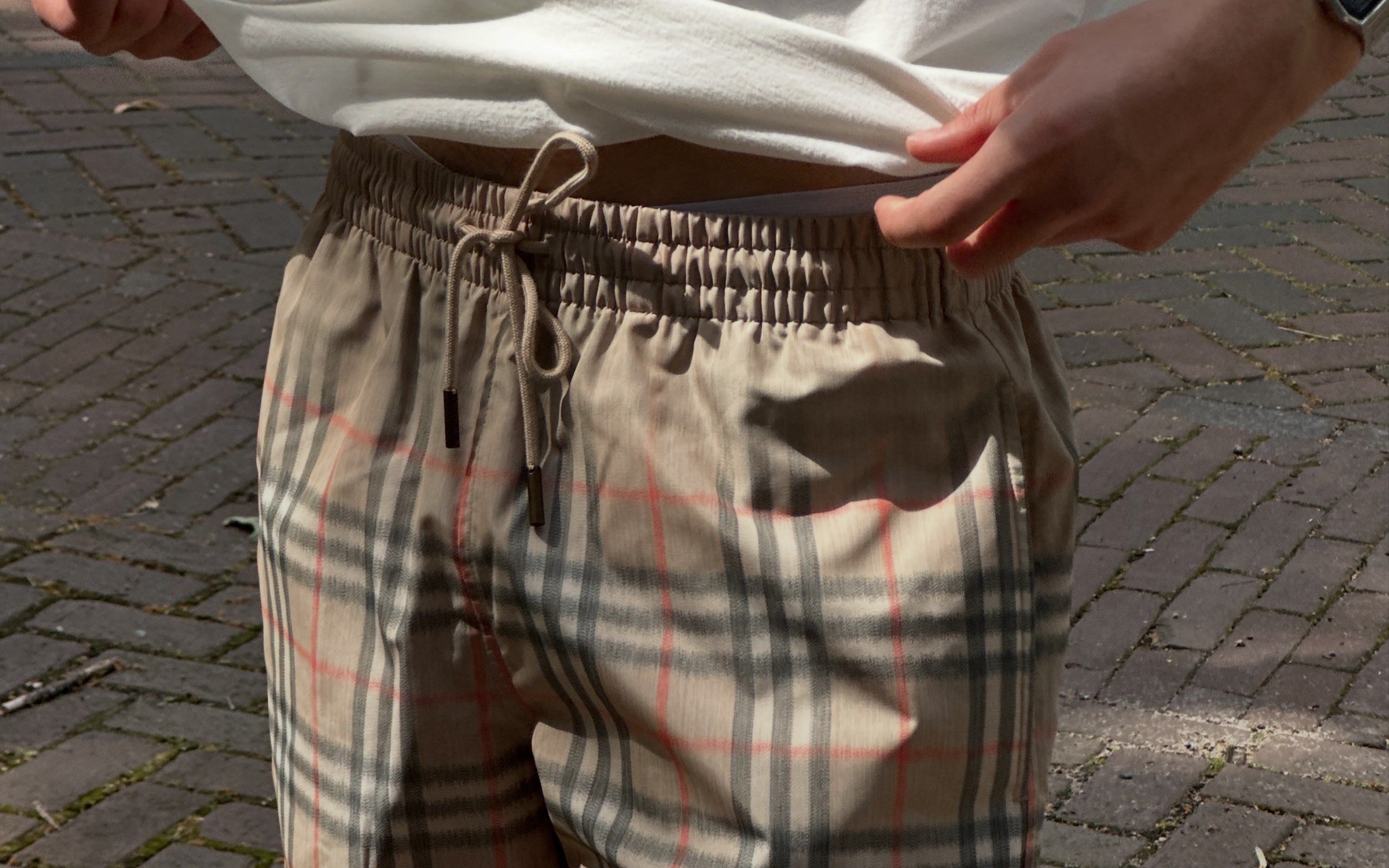
The Burberry Check. The camel, black, red, and white tartan pattern first appeared in the 1920s as the lining for trench coats. It started as an interior detail and grew into one of the most widely recognised brand marks in menswear. The Check's significance in British fashion history is hard to separate from the trench coat that carried it.
Creative leadership. Under creative directors including Christopher Bailey, Riccardo Tisci, and, more recently, Daniel Lee, Burberry has updated its identity while keeping its British references intact. Bailey held the role longest, seventeen years from 2001 to 2018, and set much of the visual language later directors built on. The brand moved into luxury fashion without abandoning the material and cultural grounding that gave it its character.
The sections below trace each of these milestones in more detail, from Basingstoke in 1856 to where the brand sits today.
Burberry's Founding and Early History
Thomas Burberry came to outerwear through practical trade, not fashion theory. He trained as a draper's apprentice before opening his first shop in Basingstoke in 1856, at the age of 21. The early business focused on weatherproof clothing for rural and outdoor use, which put function ahead of appearance from the start.
That focus on practical construction set the direction the brand would follow for the next 35 years. By 1891, Burberry had opened its first London store on Haymarket, moving the brand into a more prominent retail position without changing what it made.
Key dates in Burberry's early history:
- 1856: Thomas Burberry opens his first shop in Basingstoke, Hampshire.
- 1888: Burberry patents gabardine, a water-resistant and breathable woven fabric.
- 1891: Burberry opens its first London store on Haymarket.
The Haymarket address placed Burberry in a different commercial context, but the brand's identity stayed rooted in weatherproof outerwear. That grounding in practical British clothing is what made the later reputation possible.
The Invention of Gabardine
Gabardine is the technical foundation of Burberry's outerwear reputation. Burberry patented the fabric in 1888 after developing a process that waterproofed individual threads before weaving, rather than treating the finished cloth. The result was a fabric that resisted rain while still allowing air to move through it.
That distinction mattered. Existing weatherproof materials at the time relied on rubberised cotton, which kept out water but trapped heat and moisture. Gabardine solved both problems in one fabric, which gave Burberry a clear point of difference in practical outerwear.
What made gabardine technically significant:
- Construction method: individual fibres were waterproofed before weaving, not after.
- Breathability: the weave allowed airflow that rubberised materials couldn't provide.
- Weight: gabardine was lighter than rubberised alternatives without sacrificing weather resistance.
- Durability: the treated fibres held their properties across extended use.
The gabardine patent gave Burberry something most outerwear brands didn't have: a proprietary material with a demonstrable performance advantage. That technical credibility carried into every product the brand made from it, including the trench coat that followed less than three decades later.
The Trench Coat's Significance
The Burberry trench coat was developed during the First World War for use by British Army officers. Its name comes directly from the trenches where it was worn. The design brief was military: the coat needed to withstand wet conditions, allow freedom of movement, and include practical features for field use.
Those requirements shaped the garment's construction. Epaulettes, a storm flap across the chest, adjustable sleeve straps, and a belted waist all came from military function rather than stylistic choice. The coat worked because it solved real problems, and that utility is what gave it longevity after the war ended.

Key points in the trench coat's history:
- First World War origin: developed for British Army officers during active service.
- Name and context: the term "trench coat" refers directly to the trenches where it was worn.
- Functional design features: epaulettes, storm flap, D-ring belt, and adjustable cuffs were all drawn from military requirements.
- Post-war transition: the coat moved into civilian wear after 1918 and became a fixture in British menswear.
- Cultural visibility: the trench coat appeared widely in film and popular culture throughout the 20th century, reinforcing its place in fashion history independent of Burberry's marketing.
The trench coat is the clearest example of how Burberry's practical design approach produced something with lasting relevance. It began as a military supply contract and became one of the most referenced garments in the history of British fashion.
Burberry's British Identity
Burberry's British identity developed through recognisable design and institutional recognition, not through marketing alone. Three milestones in particular shaped how the brand came to represent a specific kind of Britishness in clothing.
The Burberry Check appeared first as a trench coat lining in the 1920s. The camel, black, red, and white tartan pattern was a functional interior detail before it became a brand mark. As the trench coat grew in visibility, so did the lining that came with it.

Key milestones in Burberry's British identity:
- 1920s: The Burberry Check appears as a lining inside trench coats, initially as an interior detail rather than a visible brand signal.
- 1955: Queen Elizabeth II grants Burberry a royal warrant as a weatherproofer, a formal recognition of the brand's outerwear standing.
- 1960s: Burberry reported that one in five coats exported from Britain carried the Burberry label, reflecting the brand's commercial reach during that period.
The royal warrant placed Burberry within a tradition of British institutional recognition that carried weight both domestically and in export markets. The export statistic from the 1960s shows how far the brand had extended its reach before the modern luxury expansion that followed.
British references remained central as Burberry moved into fashion. The Check, the trench coat, and the royal warrant gave the brand a set of identifiable markers that creative directors could draw on without having to reinvent the brand from scratch each time.
Burberry's Modern Brand Evolution
Burberry's modern history covers roughly 25 years of retail expansion, leadership changes, and shifts in how the brand positioned itself within luxury fashion. The sequence matters because each decision built on what came before it.
The timeline below covers the main developments, including the full sequence of creative directors, which the original record of this period often leaves out.
- 2000: Burberry opens a flagship store on Bond Street in London as part of a broader brand reset that aimed to move the label upmarket.
- 2001: Christopher Bailey joins as design director, becoming chief creative officer in 2009. He leads Burberry's creative direction for seventeen years, the longest tenure of any modern creative head.
- 2006–2014: Angela Ahrendts serves as Chief Executive. During her tenure, Burberry's sales rose to more than £2 billion, driven by international expansion and tighter control over brand positioning.
- 2010: Burberry livestreams a runway show online, an early example of a major fashion brand using digital channels to reach audiences directly rather than through traditional media.
- 2016: Burberry introduces a see-now-buy-now approach, allowing consumers to purchase items immediately after their runway debut rather than waiting months for retail availability.
- 2018: Bailey departs and Riccardo Tisci becomes chief creative officer. The same year, Burberry announces a ban on burning unsold products, responding to criticism of the waste practices common across the luxury sector.
- 2022: Daniel Lee replaces Tisci as chief creative officer, with a stated aim of reconnecting the brand with its British roots, drawing on the same material and cultural references that defined the early brand.
No single leader or decision accounts for all of these changes. Each one reflected a different commercial or cultural pressure the brand was responding to at the time. What stayed consistent across the period was the British reference point: the trench coat, the Check, and the outerwear heritage remained the anchors even as the fashion identity shifted around them.
Burberry in Casual Menswear
Burberry's outerwear history gives its casual menswear a grounding that most fashion brands can't claim. The brand didn't start with aesthetics and add function later. It started with function, and the aesthetic followed. That sequence matters when you're assessing whether a piece of clothing is worth the price.
Gabardine and the trench coat established fabric and construction as central to what Burberry made. Those values carried forward into the broader range. When you pick up a Burberry piece today, the weight and finish reflect a brand that built its credibility on weatherproof outerwear, not on logo licensing.
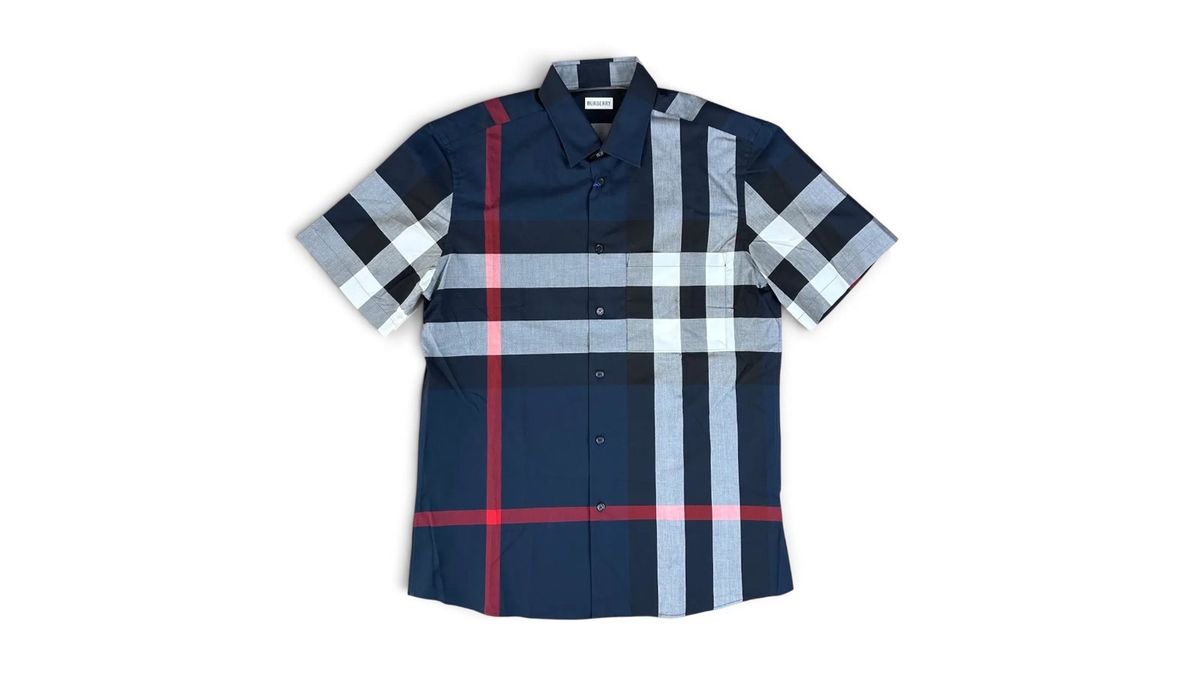
For men shopping Burberry as part of a premium casualwear wardrobe, a few practical points are worth keeping in mind:
- Fit: Burberry cuts tend toward a structured, tailored silhouette. Check the measurements rather than relying on size alone.
- Condition: past-season stock in excellent condition is the most practical entry point into the brand at under retail price.
- Fabric: gabardine, wool blends, and treated cotton appear across outerwear and knitwear. Knowing what the fabric is helps you understand what you're buying.
- Styling: Burberry outerwear sits cleanly alongside other premium casualwear brands. It works with C.P. Company, Stone Island, and Paul & Shark without the pieces competing.
Casual Quarter sells Burberry alongside C.P. Company, Hugo Boss, Paul & Shark, and Stone Island, with most stock from past seasons at under retail price. The brands are selected because they hold their identity and construction quality across seasons. Burberry fits that range for the same reason it fits a casual menswear wardrobe: the heritage is real, and the clothing reflects it.
Browse the Burberry collection at Casual Quarter if you want to see what's currently available.
Key Takeaways from Burberry's History
Burberry's history runs in a clear sequence from Thomas Burberry's practical beginnings in Basingstoke to its current position in global luxury fashion. Six developments account for most of what the brand is today.
- 1856: Thomas Burberry founds the company in Basingstoke as a weatherproof outerwear business.
- 1888: Burberry patents gabardine, establishing a technical reputation for breathable, water-resistant fabric that competitors couldn't replicate easily.
- First World War: The trench coat is developed for military use and later becomes one of the defining garments in British fashion history.
- 1920s: The Burberry Check appears as a trench coat lining and grows into one of the most recognisable brand marks in menswear.
- 1955 onwards: A royal warrant, strong export numbers, and a sequence of creative directors, Bailey, Tisci, and Lee, each reinforce Burberry's British identity in different ways across different decades.
- 2000s to present: Retail expansion, digital innovation, and new creative direction move Burberry into luxury fashion without cutting its connection to the outerwear heritage that started it.
That same history is why Burberry still carries weight in premium casual menswear. The brand's credibility comes from what it made before it became a fashion name, and that grounding shows up in the clothing.
If you want to explore Burberry at under retail price alongside other premium casualwear brands, the Burberry collection at Casual Quarter is a practical starting point.
Burberry History FAQ
When was Burberry founded?
Burberry was founded in 1856. Thomas Burberry opened his first shop in Basingstoke, Hampshire, that year.
Who founded Burberry?
Thomas Burberry founded the brand. He trained as a draper's apprentice before opening his own outerwear business at the age of 21.
What is Burberry best known for?
Burberry is best known for the trench coat, the gabardine fabric, and the Burberry Check. All three originated in the brand's outerwear work during the 19th and early 20th centuries.
When did Burberry invent gabardine?
Burberry patented gabardine in 1888. The fabric waterproofed individual threads before weaving, producing a material that was both water-resistant and breathable.
When did the Burberry Check first appear?
The Burberry Check first appeared in the 1920s as the lining inside trench coats. It began as an interior detail and grew into one of the most recognisable brand marks in British fashion history.
Why is the Burberry trench coat significant?
The trench coat was developed during the First World War for British Army officers. Its design features came from military requirements, and the coat moved into civilian fashion after 1918. It remains one of the most referenced garments in British fashion history and the most visible expression of Burberry's outerwear heritage.
Who has led Burberry's creative direction?
Christopher Bailey led Burberry's creative direction longest, from 2001 to 2018, working alongside CEO Angela Ahrendts through the brand's digital and retail expansion. Riccardo Tisci succeeded him as chief creative officer in 2018, and Daniel Lee has held the role since 2022, with a stated focus on reconnecting the brand with its British roots.