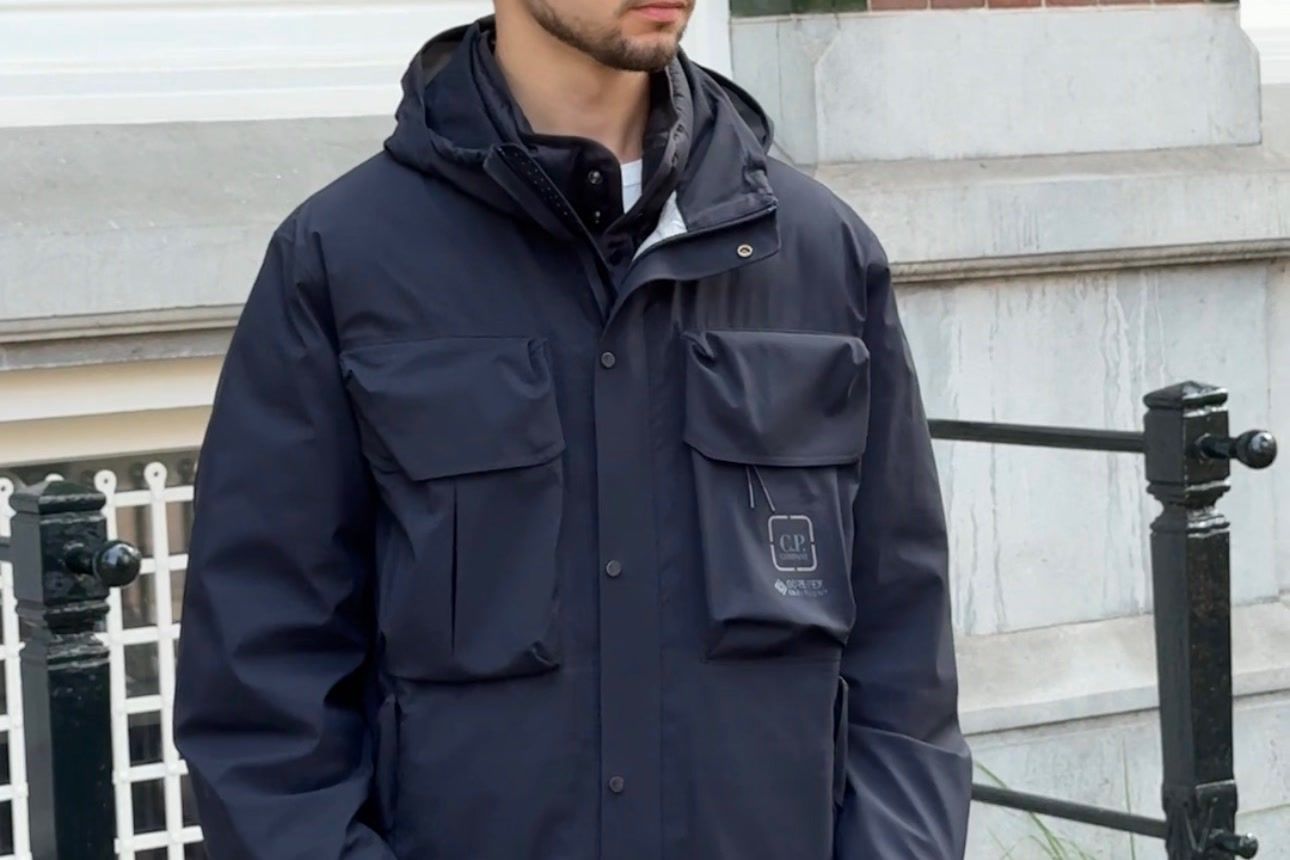
Is C.P. Company a Luxury Brand?
Geschrieben von Frank Struik
In diesem Artikel
- Is C.P. Company a luxury brand?
- C.P. Company's ownership history
- Massimo Osti's design philosophy
- Garment dyeing and textile innovation
- Technical design and functionality
- The Goggle Jacket
- C.P. Company's cultural influence
- C.P. Company and Stone Island
- Luxury versus premium casualwear
- C.P. Company pricing position
- C.P. Company value and quality
- C.P. Company's sustainability claims
- Key takeaways
- C.P. Company FAQs
The label on a C.P. Company piece doesn't say luxury. Neither does the price tag on a Hermès bag say "practical." But that comparison tells you something useful: the categories people use to sort fashion don't always map cleanly onto the brands that matter.
If you've been searching "is C.P. Company a luxury brand" and getting vague answers, that's because the question sits in genuinely complicated territory. C.P. Company charges designer prices, uses technical materials that most brands don't bother with, and has shaped the way men dress across Europe for over 50 years. But it doesn't operate like a traditional luxury house, and it has never tried to.
This article breaks down where C.P. Company actually sits in the market, how its pricing compares to brands like Stone Island, Burberry, and Moncler, and what "premium" really means when it's applied to casualwear. By the end, you'll have a clear answer rather than a vague one.
Is C.P. Company a luxury brand?
C.P. Company is not a traditional luxury brand, but it sits well above the line of ordinary designer casualwear. It occupies a specific space: premium Italian menswear with genuine design credentials, a 50-year history, and prices that reflect real material and construction quality rather than a label premium.
Traditional luxury brands, such as Hermès, Louis Vuitton, or Brunello Cucinelli, build their pricing around heritage houses, hand finishing, and deliberate scarcity. C.P. Company builds its pricing around functional design, technical fabrics, and Massimo Osti's original vision for clothing that performs as well as it looks. The goggle hood is not decorative. The Metropolis shell is waterproof. The lens pocket exists because Osti wanted it there.
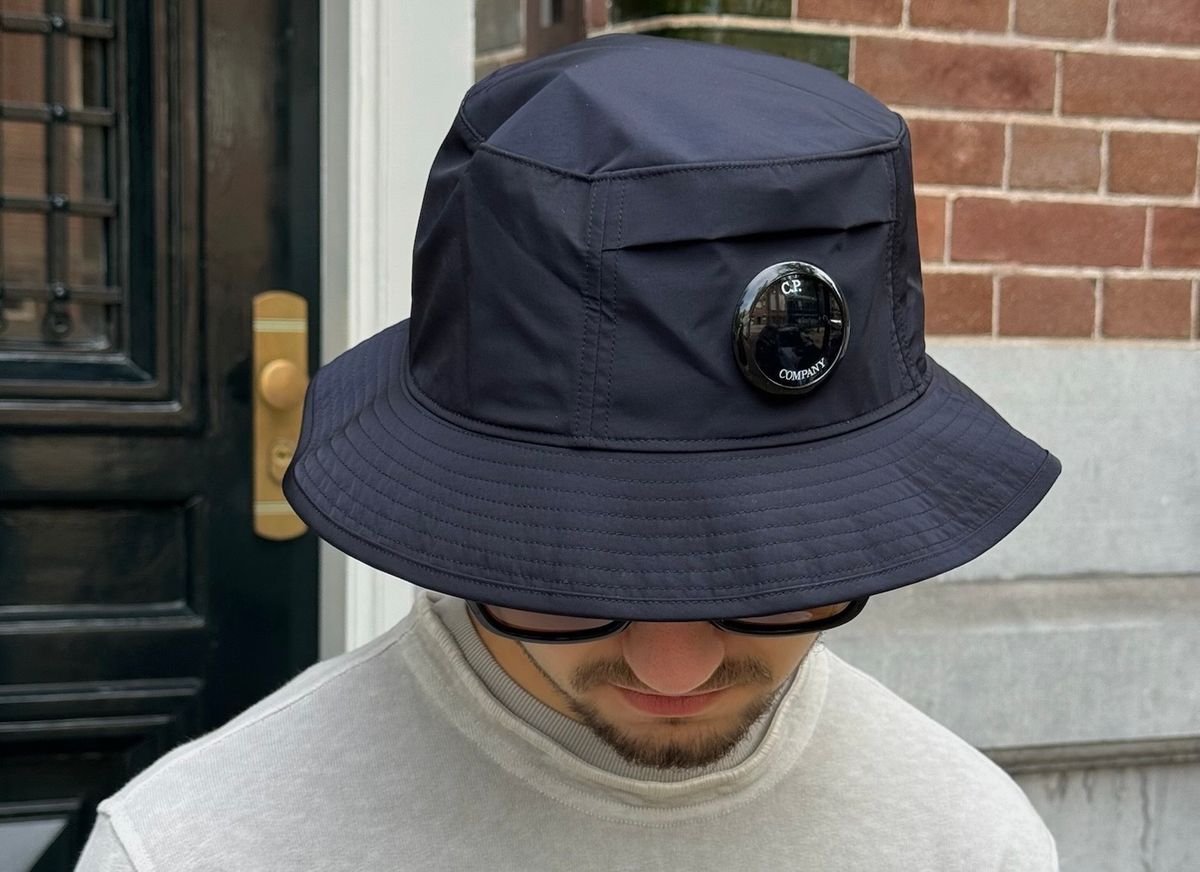
That distinction matters if you're deciding what to spend. C.P. Company pieces regularly retail between €200 and €800, which puts them in the same bracket as premium designer casualwear labels like Stone Island and Paul & Shark. They sit above the mainstream designer tier, below the traditional luxury tier, and firmly in a category that fashion writers tend to call elevated casual or luxury casualwear.
What differentiates C.P. Company from other luxury brands?
C.P. Company differentiates itself through functional design, not status signalling. Where traditional luxury brands emphasise exclusivity and occasion dressing, C.P. Company focuses on wearable technical outerwear, garment-dyed knitwear, and pieces built for daily use.
The brand started in 1971 under Massimo Osti in Bologna. Osti spent decades experimenting with dyeing techniques, fabric treatments, and construction methods that were ahead of what most brands attempted at the time. That technical foundation is still visible in the current product range, in features like the Goggle Jacket's integrated hood lens, the use of Ghost and Flatt Nylon shells, and the signature tonal dyeing process that gives each piece a slightly different finish.
Three things separate C.P. Company from most luxury brands.
- It targets function first. The outerwear works in rain and cold, not just in editorial shoots.
- It carries genuine subcultural weight. C.P. Company became part of British and European terrace culture in the 1980s and 1990s through product quality, not marketing spend.
- It does not rely on logo prominence. The goggles and the badge carry the recognition, not a repeated monogram.
How does C.P. Company's pricing compare to other brands in the luxury casualwear market?
The table below compares approximate retail price ranges across brands commonly grouped in the premium and luxury casualwear market. Prices reflect typical outerwear and knitwear, and will vary by season and retailer.
| Brand | Typical jacket price range | Category |
|---|---|---|
| C.P. Company | €200–€800 | Premium casualwear |
| Stone Island | €200–€900 | Premium casualwear |
| Paul & Shark | €200–€700 | Premium casualwear |
| Moncler | €800–€2,200+ | Luxury casualwear |
| Brunello Cucinelli | €1,700–€5,500+ | Traditional luxury |
C.P. Company sits closer to Stone Island and Paul & Shark than it does to Moncler or Brunello Cucinelli. You pay for the material quality and the design history, not for a house name that operates in a different social register entirely.
If you want to explore current C.P. Company pieces at under retail price, the C.P. Company collection at Casual Quarter is a good place to start.
C.P. Company's ownership history
C.P. Company has a longer and more complicated ownership history than most people realise, and that history explains a lot about why the brand carries the weight it does today. Massimo Osti founded it in Bologna in 1971 under the name Chester Perry, renamed C.P. Company in 1978. From the start, Osti treated clothing as a design problem rather than a fashion exercise, looking at military surplus, workwear, and industrial textiles and asking what would happen if those materials were applied to everyday menswear. The full founding story, including Osti's later work on Stone Island, is in our C.P. Company Goggle Jacket guide.
Osti transferred a 50% stake in the company to Carlo Rivetti in 1984, then the remaining shares in 1993, when C.P. Company joined Rivetti's Sportswear Company group, the same group that owned Stone Island at the time. Rivetti sold C.P. Company to FGF Industry in 2010, and Hong Kong-based Tristate Holdings Limited acquired it in 2015, which remains the brand's owner today. In 2019, Massimo Osti's son, Lorenzo Osti, was appointed the brand's president, bringing the founder's own family back into its leadership.
Massimo Osti's design philosophy
Osti's approach was straightforward: take unfamiliar materials and build new forms from them. He was not interested in decorative fashion. He wanted clothing that solved problems, held up to use, and looked good because it was made well, not because it chased a trend.
He drew heavily from military and workwear references, not for aesthetic reasons alone, but because those garments were engineered to perform. A field jacket from the 1960s had to work in cold and wet conditions. Osti asked whether a civilian jacket could hold to the same standard.
That philosophy produced some of the most recognisable design details in menswear: the goggle hood with its integrated lens, pockets placed for function rather than symmetry, and shells treated to resist weather without sacrificing movement. None of those details were arbitrary. Each one started with a practical question.
I like to play with forms which don't belong to the history of the 20-year-olds of today, using materials which were unknown to the 20-year-olds of yesteryear.
Garment dyeing and textile innovation
C.P. Company introduced whole-garment dyeing in 1974, and that process remains one of the clearest examples of what separates the brand from standard casualwear.
Most clothing manufacturers dye fabric before cutting and sewing. C.P. Company dyes the finished garment. The result is a colour that sits differently on seams, stitching, and panels, so each piece carries a tonal variation that a standard dye process cannot replicate. Two jackets from the same production run will look slightly different. That is a feature, not an inconsistency.
The technique requires more time, more careful handling, and different finishing methods than conventional production. It also places real limits on which fabrics work. Osti spent years identifying textiles that responded well to the process, which pushed the brand's material research further than most menswear labels ever go.
Garment dyeing is now more common across the industry, but C.P. Company was using it at scale 50 years ago. That history matters when you're trying to understand whether the brand's premium price reflects genuine craft or just marketing.
Technical design and functionality
C.P. Company treats clothing as equipment. That framing is not a tagline; it describes how the design process actually works.
Outerwear shells are selected for measurable performance: waterproof ratings, wind resistance, breathability, and weight. The brand uses fabrics including Mille Miglia, Ghost, Flatt Nylon, and Metropolis, each chosen for a specific combination of properties rather than appearance alone. A Metropolis jacket handles rain because the shell performs, not because it has a DWR coating applied as an afterthought.
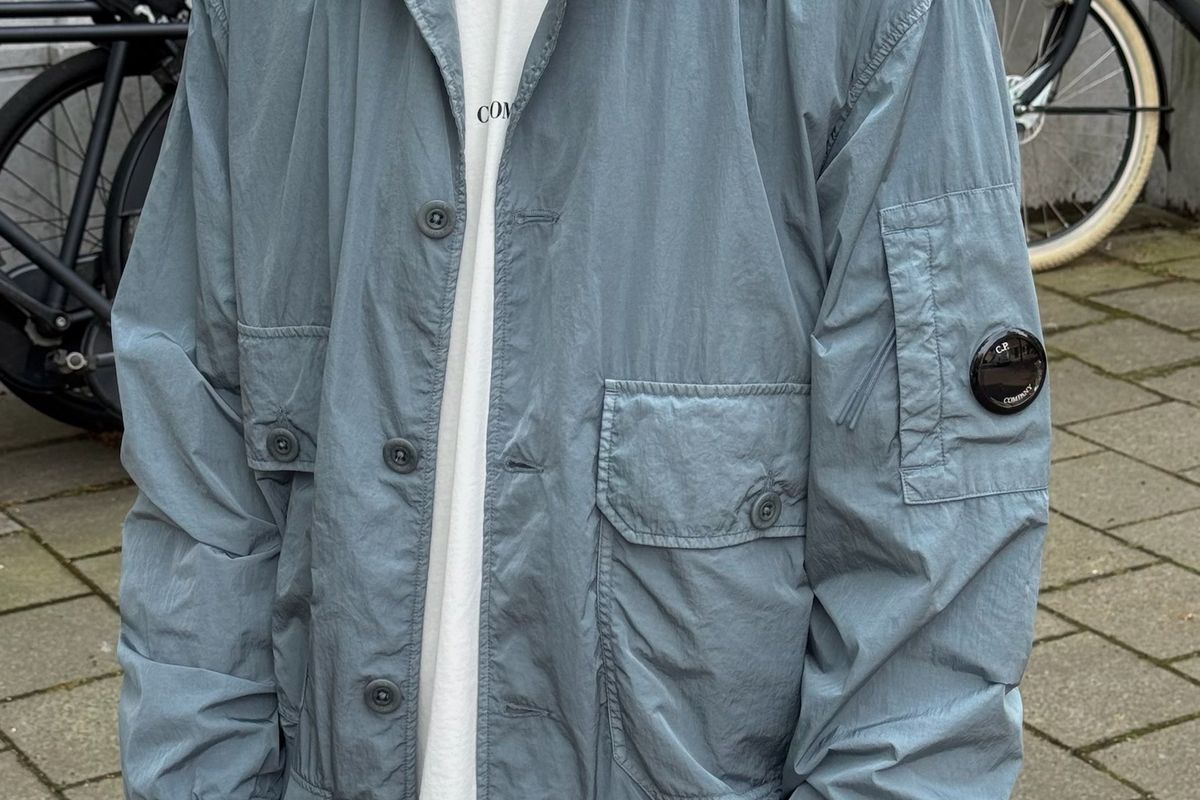
Features are built in rather than added on. The Goggle Jacket's hood lens protects the face in wind and rain. Interior pockets are sized and positioned for actual use. Articulated seaming allows movement without restricting the shell. These are not stylistic choices dressed up as technical ones. They are engineering decisions made at the design stage.
This approach puts C.P. Company in a category that sits between technical sportswear brands, such as Arc'teryx, and traditional luxury menswear. The brand does not compete on trail performance, and it does not compete on occasion dressing. It occupies the ground where premium casualwear and functional outerwear genuinely overlap.
The Goggle Jacket
The Goggle Jacket is the piece most people associate with C.P. Company, and it's a useful shorthand for how the brand thinks: a hood with an integrated lens, developed for the 1988 Mille Miglia, that solved an actual problem instead of decorating a garment. See our complete Goggle Jacket guide for the full history, how it fits, and how to check one is genuine.
Decades later, the Goggle Jacket still sits at the centre of the C.P. Company range. Different shells, updated fits, and seasonal colourways keep it current, but the core design logic hasn't changed: a hood that works, a shell that handles weather, a silhouette that holds up in use.
C.P. Company's cultural influence
C.P. Company didn't build its market position through advertising. British casuals adopted the brand in the mid-1980s alongside Stone Island, Lacoste, and Fila, brought home from European away trips, and that subcultural credibility (covered in more depth in our Goggle Jacket guide) is part of why the brand carries real weight rather than just a price tag.
The influence extended well beyond the UK. Across Italy, Germany, the Netherlands, and Scandinavia, C.P. Company built a following among men who wanted quality casualwear and weren't interested in conventional luxury signalling. The result is a brand with genuine cross-cultural recognition that sits outside the usual fashion industry channels.
C.P. Company and Stone Island
C.P. Company and Stone Island share a founder, a city, and a design approach, which is why the two brands are almost always discussed together. Massimo Osti founded Stone Island in 1982, a decade after Chester Perry. The full story of that split, and Stone Island's own path to its current ownership, is in our Stone Island origin guide. The two brands were even under the same ownership for a period: Rivetti's Sportswear Company group owned both after 1993. Stone Island stayed there until Moncler acquired it in 2020, while C.P. Company had already moved on to different owners by then.
On price, the two brands occupy similar territory today. Stone Island jackets typically run from around €200 to €900 at retail, while C.P. Company sits between €200 and €800. Neither brand is cheaper than the other in a meaningful sense. The choice usually comes down to design preference rather than budget.
On resale, both brands hold value reasonably well compared to standard designer casualwear, though resale strength varies significantly by piece, condition, and season.
The short answer is that C.P. Company and Stone Island are peers, not competitors in a strict sense. They come from the same lineage, sit in the same market, and appeal to overlapping audiences who understand what both brands are doing.
Luxury versus premium casualwear
The distinction between luxury fashion and premium casualwear is worth understanding clearly, because it changes how you evaluate a brand like C.P. Company.
Luxury fashion, as practised by houses such as Hermès, Loro Piana, or Brunello Cucinelli, is defined by hand craftsmanship, deliberate scarcity, and a pricing structure that functions as a social signal as much as a quality signal. These brands operate in a specific register where the price is partly the point.
Premium casualwear operates differently. Brands like C.P. Company, Stone Island, and Paul & Shark charge more than high street labels because they use better materials, build with more care, and design with a specific technical or cultural purpose. The price reflects that, but it does not aim to exclude in the same way a luxury house does.
The table below outlines the key differences between the two categories.
| Feature | Luxury fashion | Premium casualwear |
|---|---|---|
| Pricing driver | Heritage, scarcity, status | Materials, construction, function |
| Craftsmanship | Often hand-finished | Technical, factory-produced with quality controls |
| Cultural role | Occasion and aspiration | Daily wear, subculture, sport |
| Typical buyer | High-net-worth consumer | Style-conscious men 20–40 |
| Key brands | Hermès, Brunello Cucinelli, Loro Piana | C.P. Company, Stone Island, Paul & Shark |
C.P. Company sits in the premium casualwear category and reaches toward the upper end of it. It does not belong in the luxury fashion category by the normal criteria, but it is not simply a designer label with a badge. The materials are real. The construction decisions are deliberate. The design history goes back five decades.
C.P. Company pricing position
C.P. Company prices its products at the upper end of the premium casualwear market, and understanding what drives that price matters more than the number itself.
At full retail, a C.P. Company jacket typically costs between €200 and €800, depending on shell, construction, and collection tier. Knitwear and lighter pieces sit toward the lower end of that range. More technical outerwear, such as the Metropolis or the Multi-Pocket shell jackets, sits toward the higher end.
Those prices reflect three things. First, the fabric quality: C.P. Company sources and develops technical textiles that are not standard across the industry. Second, the dyeing and finishing process: whole-garment dyeing adds time and complexity to production. Third, the design investment: the brand has maintained a consistent research-and-development approach since the 1970s, and that carries a cost.
Past-season C.P. Company pieces are available at under retail price, which is how Casual Quarter sources its stock. The design quality and material performance do not change because a jacket is from a previous season. A Metropolis shell from last year handles rain in the same way it did when it first released.
If you want to find C.P. Company at under retail price, the C.P. Company collection at Casual Quarter carries current and past-season stock with full authenticity guaranteed.
C.P. Company value and quality
C.P. Company's value case rests on three things: materials that are genuinely better than the alternatives, construction that holds up over years of use, and design decisions that serve the wearer rather than the brand's marketing.
On materials, the brand uses textiles developed specifically for its outerwear range. Ghost fabric weighs almost nothing and packs down flat. Flatt Nylon offers structure without stiffness. Metropolis balances waterproofing with movement in a way that cheaper shells do not. These are not marketing terms. They are fabrics with specific properties that you notice in use.
On construction, the finish quality across C.P. Company's outerwear is consistently high. Seams are taped where waterproofing requires it. Zips run smoothly. Hoods sit correctly. The garments are made to last several seasons of regular wear, which matters if you're calculating what you spend per use over time.
On value relative to price, C.P. Company compares well to brands at similar price points. A Metropolis jacket at €450 outperforms many jackets at the same price from brands without the same material or construction investment. It also outperforms itself over time, because a piece that holds up for five years costs less per wear than one that needs replacing after two. In practice, C.P. Company's outerwear tends to hold up well after years of regular wear, particularly the more technical shells.
C.P. Company's sustainability claims
C.P. Company has made moves toward more sustainable production, but the full picture requires some care in how you read those claims.
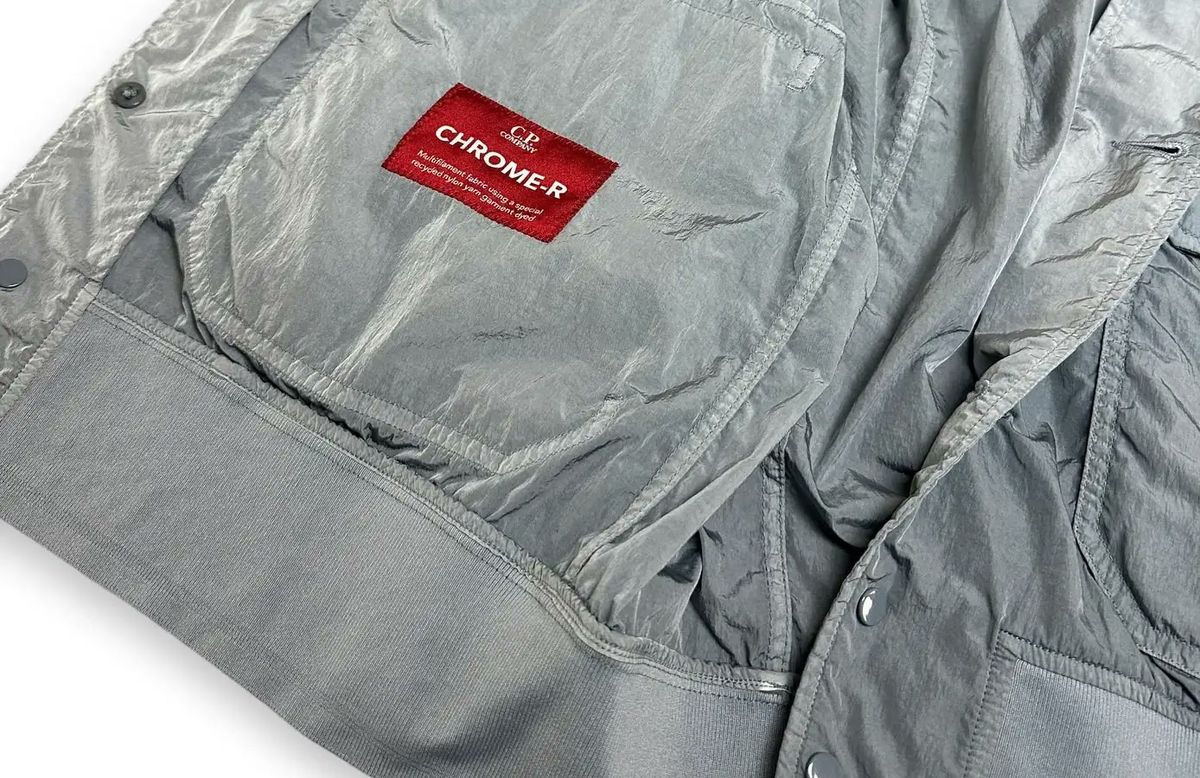
The brand introduced C.P. Shell Recycled, a softshell fabric made from recycled polyester and certified to the Global Recycled Standard, into parts of its outerwear range. Chrome-R, a shiny multifilament nylon made from regenerated production scraps, is also GRS-certified. Both are verifiable developments, and the fabrics perform comparably to the brand's standard technical materials.
What that does not mean is that C.P. Company's full production is environmentally neutral, or that sustainability is a defining feature of the brand. Recycled fabric in a handful of shells is a real step, not a complete transformation of a manufacturing operation that involves complex dyeing processes, global sourcing, and high-volume production.
If sustainability is a priority for you, C.P. Company publishes its Responsibility Program, worth checking directly for which specific pieces use recycled materials and how the brand's commitments develop over time.
The honest position is that C.P. Company is doing more than most premium casualwear brands in this area, and less than some dedicated sustainable labels. That is probably an accurate description of where the industry sits more broadly.
Key takeaways
C.P. Company is a premium Italian designer casualwear brand. It is not a traditional luxury house, and it does not claim to be one.
The brand earns its price through genuine technical innovation, a 50-year design history, and materials that most casualwear labels do not use. Whole-garment dyeing, functional outerwear shells, and design features rooted in real problems rather than aesthetics are what separate it from standard designer casualwear.
It sits in the same market bracket as Stone Island and Paul & Shark, above mainstream designer labels, and well below traditional luxury houses like Hermès or Brunello Cucinelli. The word that fits best is premium, specifically premium casualwear with a technical edge and real cultural credibility.
If you are weighing up whether a C.P. Company piece is worth the spend, the question to ask is not whether it is luxury. The question is whether the material quality, the design thinking, and the expected lifespan justify the price for how you actually plan to wear it. For most people who know the brand, the answer is yes.
C.P. Company FAQs
Is C.P. Company higher-end than standard sportswear?
Yes, C.P. Company sits well above standard sportswear in both price and construction. Sportswear brands like Nike or Adidas produce at mass scale for a broad market. C.P. Company uses technical fabrics, more involved manufacturing processes like whole-garment dyeing, and a design-led approach that targets a much smaller audience of style-conscious buyers. The two categories are not really comparable.
Is C.P. Company better than Stone Island?
Neither brand is objectively better than the other. C.P. Company and Stone Island come from the same lineage and operate at similar price points. Stone Island has broader mainstream recognition, partly from its association with streetwear and its acquisition by Moncler in 2020. C.P. Company has remained more specialist and is often considered the more technically focused of the two. The choice depends on which design philosophy suits you, not which brand ranks higher.
Is C.P. Company worth the money?
Yes, C.P. Company is worth the money for buyers who care about material quality, functional design, and long-term wearability. The outerwear in particular holds up to years of regular use. The fabrics and construction methods are genuinely different from what you get at lower price points. Buying past-season stock at under retail price improves the value case further.
Does C.P. Company hold its value on resale?
C.P. Company holds its resale value reasonably well, particularly on recognisable pieces like the Goggle Jacket and the Metropolis shell. Condition, colourway, and season all affect resale price significantly.
Who owns C.P. Company now?
Hong Kong-based Tristate Holdings Limited has owned C.P. Company since 2015, after buying it from FGF Industry, which had bought it from Carlo Rivetti's Sportswear Company group in 2010. Massimo Osti's son, Lorenzo Osti, was appointed the brand's president in 2019.
Where can I buy C.P. Company at under retail price?
Casual Quarter stocks current and past-season C.P. Company at under retail price, with a 100% authenticity guarantee and an ART Number checker tool so you can verify genuine stock. Browse the C.P. Company collection to see what is currently available.