Paul & Shark vs Stone Island: Which Premium Menswear Brand Is Right for You?
Geschrieben von Mariam Khubashvilii
In diesem Artikel
Both Paul & Shark and Stone Island sit at the top end of designer casualwear for men. They're stocked by the same retailers, worn by the same kind of person, and both carry a genuine reputation that goes beyond the badge. But they're not the same brand, and they're not trying to be.
The problem is that most comparisons treat them as interchangeable. You get vague talk about "Italian craftsmanship" and "premium quality" without anyone actually explaining what makes each brand different or which one makes more sense for you to buy.
Stone Island built its name on technical outerwear and garment dyeing. Paul & Shark built its reputation on sailing-grade construction and weather-resistant knitwear. Both sit firmly in premium menswear, but they approach it from completely different directions. This piece breaks down those differences clearly, covering heritage, construction, pricing, and what each brand actually does best, so you can make the right call before you spend the money.
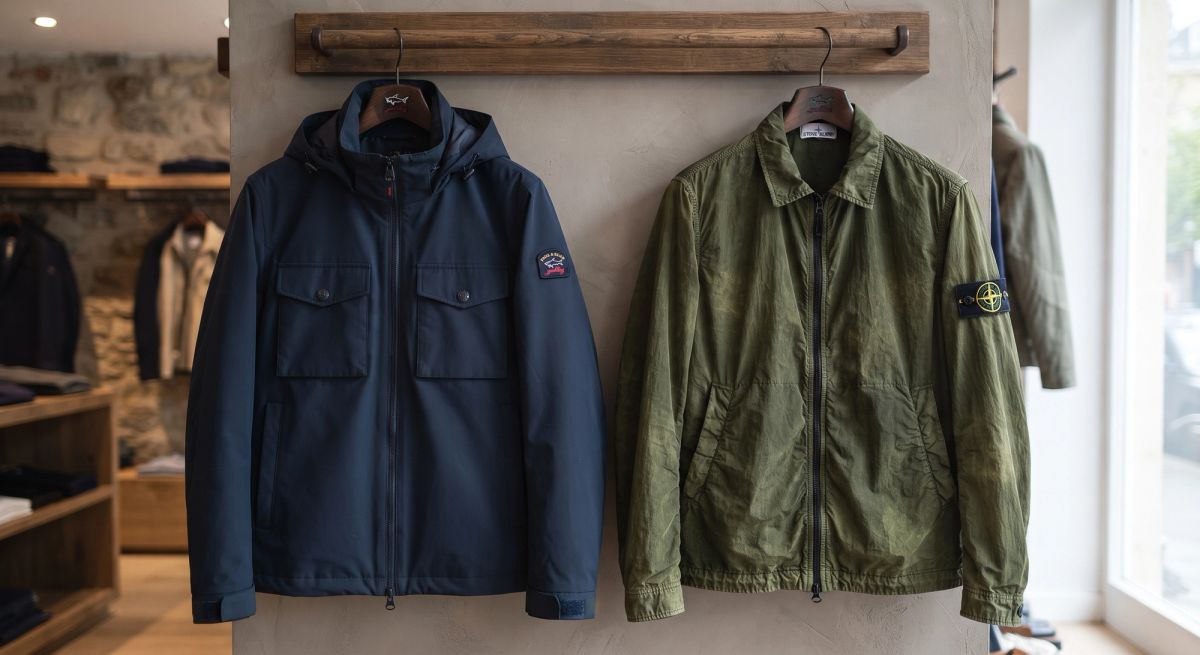
Paul & Shark vs Stone Island at a Glance
Both brands come from different starting points. They build their garments differently. And they serve slightly different purposes in a wardrobe. Picking the wrong one doesn't mean you got a bad jacket. It means you got the wrong jacket for what you actually needed.
This comparison breaks down where each brand comes from, how they construct their pieces, what their technical outerwear and knitwear actually do, and how their pricing compares. By the end, you'll have a clear picture of which brand fits your style, your use case, and your budget.
The table below sets out the key differences between Paul & Shark and Stone Island across the factors that matter most for premium casualwear.
| Factor | Paul & Shark | Stone Island |
|---|---|---|
| Founded | 1976, Italy | 1982, Italy |
| Design identity | Nautical, sailing-inspired | Technical, material-led |
| Core construction | Typhoon weatherproofing, piqué knit | Garment dyeing, material experimentation |
| Technical outerwear | Weather-resistant sailing jackets | Compass badge jackets, treated shells |
| Knitwear | Strong, long-established | Lighter presence |
| Design language | Stable, slowly evolving | Season-led, research-driven |
| Cultural recognition | Terrace, premium casual | Strong terrace and football-casual identity |
| Price positioning | Premium, broadly accessible | Premium, slightly higher ceiling |
| Best for | Knitwear, polos, classic outerwear | Technical jackets, statement outerwear |
What Should You Compare?
Two premium brands at similar price points can still be very different purchases. The right questions narrow it down quickly.
These are the factors worth looking at when choosing between Paul & Shark and Stone Island.
- Heritage and brand identity. Where each brand comes from shapes what it builds. Paul & Shark's nautical roots show up in its construction and fabrics. Stone Island's identity is built around material research and product development.
- Construction and fabric quality. Both brands use Italian manufacturing, but their processes differ. Paul & Shark relies on Typhoon weatherproofing and high-grade knitwear. Stone Island is known for garment dyeing and treated shell fabrics that vary slightly between units.
- Technical outerwear credentials. If a jacket's job is to handle real weather, the construction matters more than the badge. Both brands have strong outerwear, but they perform differently.
- Design longevity. Paul & Shark's core pieces change slowly. Stone Island works season to season, with new treatments and materials each year. One gives you a stable wardrobe anchor. The other gives you something more current.
- Cost per wear. The real value question is not what you pay up front. A jacket you wear for five years costs less per wear than one you replace in two. Both brands are built to last, but knowing which fits your life better changes the equation.
- Cultural recognition. Stone Island carries stronger visibility in football-casual and terrace culture. Paul & Shark is well-recognised in the same circles, but sits slightly quieter. Neither is right or wrong, it depends on what you want the piece to say.
Paul & Shark
The most recognisable name in Paul & Shark outerwear is Typhoon construction. Typhoon is the brand's proprietary weatherproofing system, used across its sailing jackets and performance outerwear. It delivers genuine wind and water resistance rather than a surface treatment that fades after a few seasons. The jackets are built for real conditions, which is why they hold up well as everyday outerwear in cold or wet climates.
Paul & Shark's knitwear is the other part of the story. The brand's piqué polo shirts have been a core product for decades and remain one of the cleaner options in premium casualwear. The fabric is durable, the construction is consistent, and the fit holds its shape over time. For men who want a polo that doesn't need replacing every couple of years, this is one of the better options at the price point.
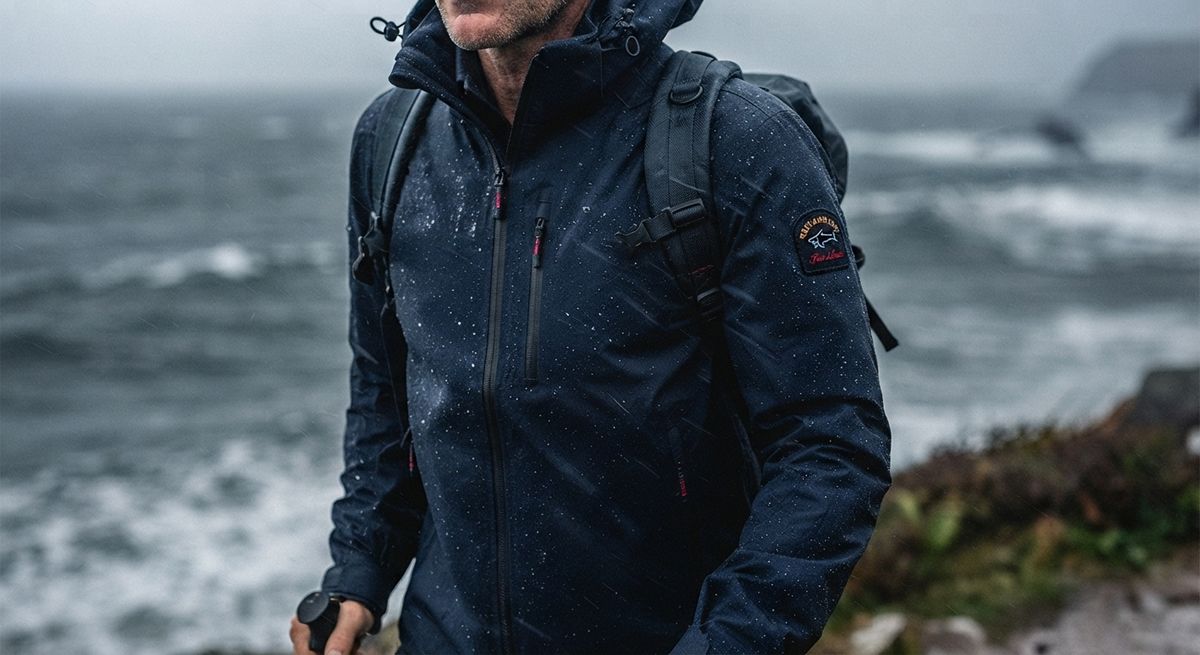
The design language across both categories moves slowly. Paul & Shark doesn't rework its pieces dramatically from season to season. If you buy a Paul & Shark jacket this year, it will still look right in five years. That stability is deliberate, and it's part of why the brand's core pieces have remained in circulation for as long as they have.
Across the range, Paul & Shark leans towards classic shapes with technical substance underneath, refining a set of products it knows work over 50 years rather than chasing trends.
Browse the Paul & Shark collection at Casual Quarter to see what's currently available at under retail price.
Stone Island
Massimo Osti founded Stone Island in 1982, a decade after launching C.P. Company, another technical menswear label built on the same fabric-first thinking. From the start, Stone Island's focus was on material experimentation rather than traditional fashion design. Osti's background was in graphic design, and he approached garment construction the same way, treating it as a problem to solve rather than an aesthetic to reproduce.

The most recognisable element of Stone Island's production is garment dyeing. Rather than dyeing the fabric before cutting and sewing, Stone Island dyes the finished garment. The result is a colour that sits differently on each piece, affected by the seams, the stitching, and the fabric structure. Two jackets from the same batch will look slightly different from each other. That's not a flaw. It's the point.
Beyond dyeing, Stone Island invests heavily in fabric research. The brand has worked with thermosensitive materials that change colour with temperature, reflective fabrics, rust-treated shells, and woven nylon treatments that create textures not found elsewhere in casualwear. They result from a genuinely research-led approach to outerwear construction.
The compass badge on the left sleeve is probably the most recognised brand mark in European casualwear. Its visibility in football culture and on the terraces built Stone Island's mainstream profile through the 1980s and 1990s, long before the brand became a fixture in luxury retail. That recognition still carries weight. In most major cities across Europe, wearing Stone Island still reads clearly to people who know what it is.
Stone Island's range covers jackets, knitwear, sweatshirts, and trousers, but outerwear is where the brand does its most distinctive work. The jackets in particular carry the technical treatments and material experiments that define what Stone Island actually is.
See the Stone Island collection at Casual Quarter for current stock at under retail price.
Which Brand Should You Choose?
The answer comes down to what you want the piece to do.
Choose Paul & Shark if you want a stable wardrobe investment in sailing-grade outerwear or premium knitwear. The Typhoon construction holds up in real weather. The piqué polos and knitwear keep their shape over years. The design doesn't date. If you're buying something to wear regularly for the next five-plus years without it looking wrong, Paul & Shark is the more reliable long-term choice.
Choose Stone Island if you want technical outerwear with a stronger visual identity and a more research-led construction. The garment dyeing gives each piece a quality you won't find at lower price points. The badge carries more cultural weight in football-casual and streetwear circles. If you want a jacket that reads immediately and has genuine technical substance behind it, Stone Island is the stronger pick.
Neither brand is the wrong choice. Paul & Shark is quieter and more consistent. Stone Island is more immediately recognisable and season-driven. Your wardrobe and how you wear these pieces should make the decision straightforward.
Interested in other brands? Check out Casual Quarter. We sell casual sportswear under retail price. Every piece of clothing is authentic and high-quality.
FAQs
How Do The Pricing Strategies Of Paul & Shark And Stone Island Compare?
Jackets from both brands typically range from around 300 euros to well over 1,000 euros. Stone Island tends to sit at the higher end, especially for advanced technical treatments, while Paul & Shark's core Typhoon outerwear is generally more accessible. At Casual Quarter, both are available under retail price on past-season stock.
What Technical Features Separate Paul & Shark From Stone Island?
Paul & Shark focuses on Typhoon weatherproofing, piqué fabric engineering, and high-tenacity nylon shells, applied consistently to weather resistance and durability. Stone Island focuses on garment dyeing and seasonal material experiments like thermosensitive fabrics and rust-dyed shells, attached via a removable badge system. Paul & Shark's approach stays fixed year to year; Stone Island's shifts each season.
Is Paul & Shark Or Stone Island Better For Football-Casual Style?
Stone Island has a longer, more visible history in football-casual and terrace culture, built through the 1980s and 1990s. The compass badge is immediately recognisable in that context. Paul & Shark is well-regarded in the same circles but carries a slightly lower profile.
Are Both Brands Made In Italy?
Yes. Paul & Shark was founded in Varese in 1976, and Stone Island was founded by Massimo Osti in 1982 in Ravarino. Both position their quality credentials around Italian manufacturing, though specific production may vary by product line and season.